
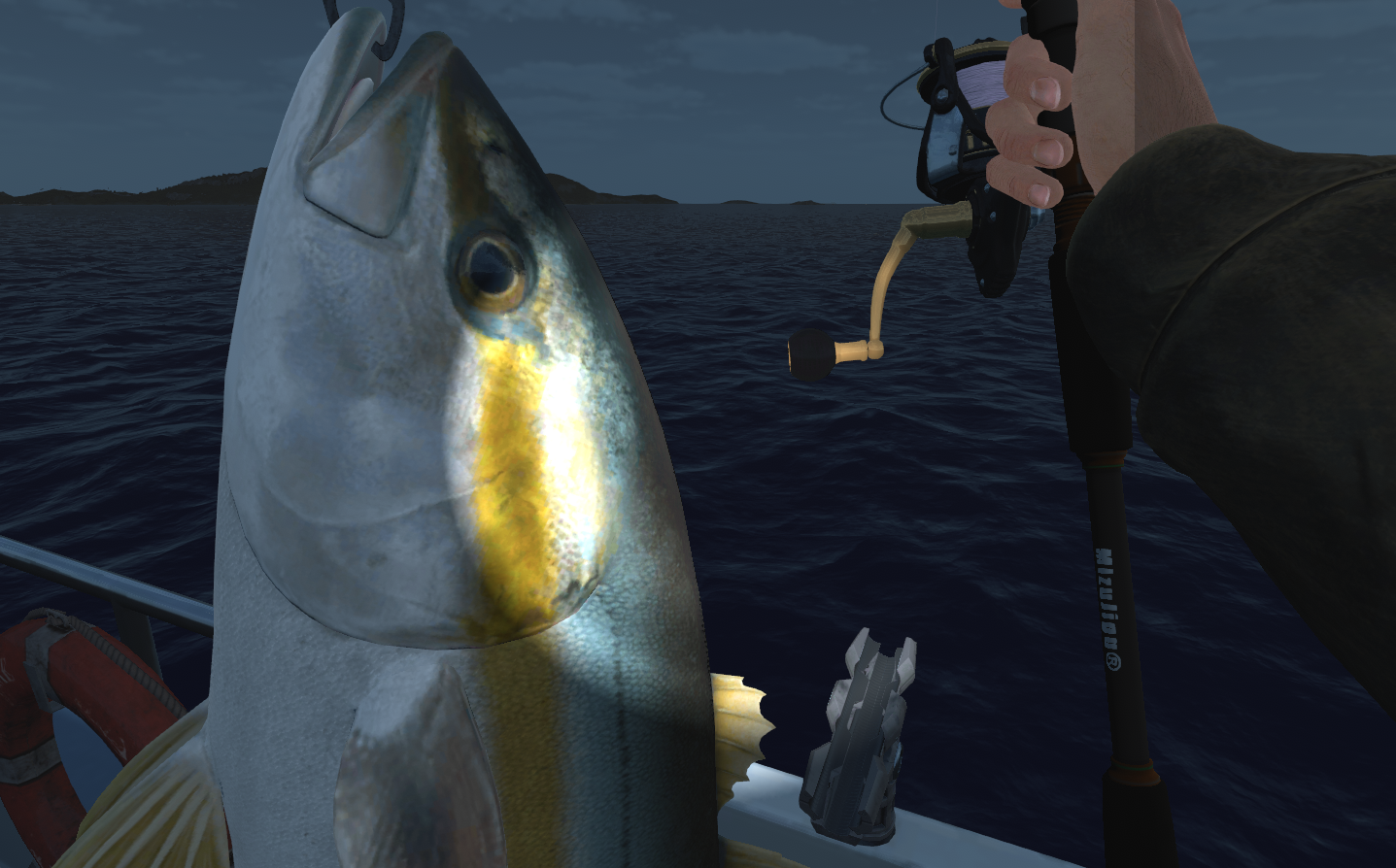
The Japanese Amberjack, better known as Yellowtail, is the fish that finally rewards casting a bucktail at Kaiji No Ri. It is a fast, aggressive schooling predator that you take by throwing a lure and ripping it back through the water, and it pays a solid mid-tier return for the effort. My Unique came in at 31.167 kg and 141.2 cm for 11,227 coins and 11,468 XP. This guide covers the spot, the bucktail rig, the fast-retrieve technique the game itself points you toward, and why night beats day for this fish.
Why Target the Japanese Amberjack?
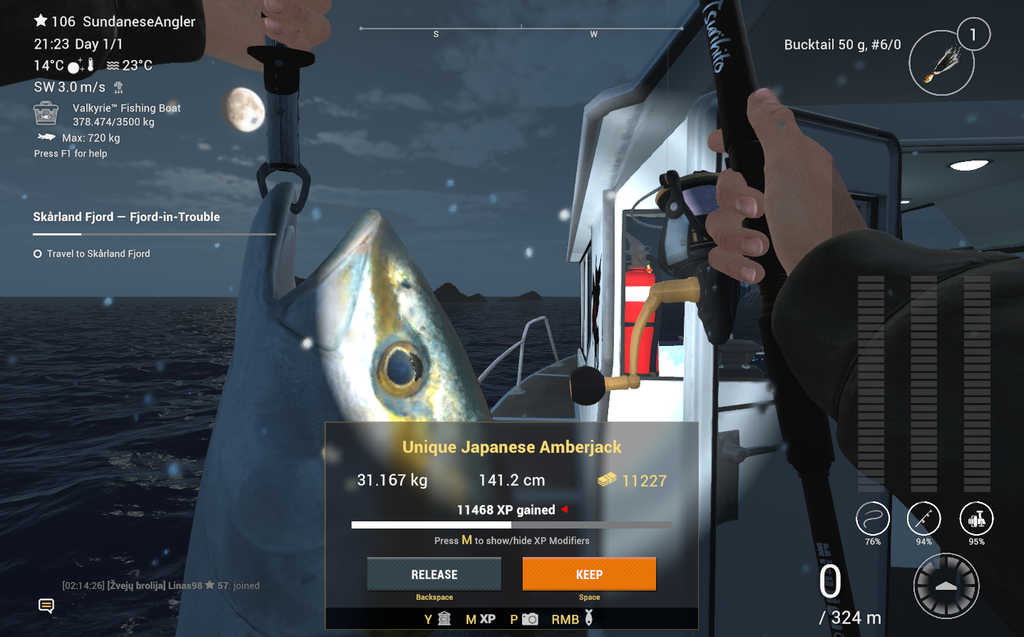
The Amberjack sits in the middle of the Kaiji No Ri pack, and that is a fair place to be. My Unique paid 11,227 coins and 11,468 XP, which is well above the small stuff like the Striped Bonito and the Bigfin Reef Squid, and below the big trolling earners like the Yellowfin Tuna and the Dogtooth Tuna. The species reaches around 40 kg, so my 31 kg Unique was not even the biggest one out there, and a larger Unique would pay more. As a coin and XP target it is genuinely worth your time, not a novelty catch.
Just as important, it is an active, fun way to fish. Where the tuna wants you trolling behind a moving boat, the Amberjack wants you casting and working a lure by hand, so it is a hands-on, fast-paced session. If you like feeling the fish hit a lure you are actively retrieving, this is one of the better fish on the map for it.
It sits in my Kaiji No Ri cluster with my Yellowfin Tuna, Striped Marlin, Albacore, Dogtooth Tuna, Striped Bonito, Bigfin Reef Squid, Giant Trevally, and Giant Grouper guides.
About the Japanese Amberjack
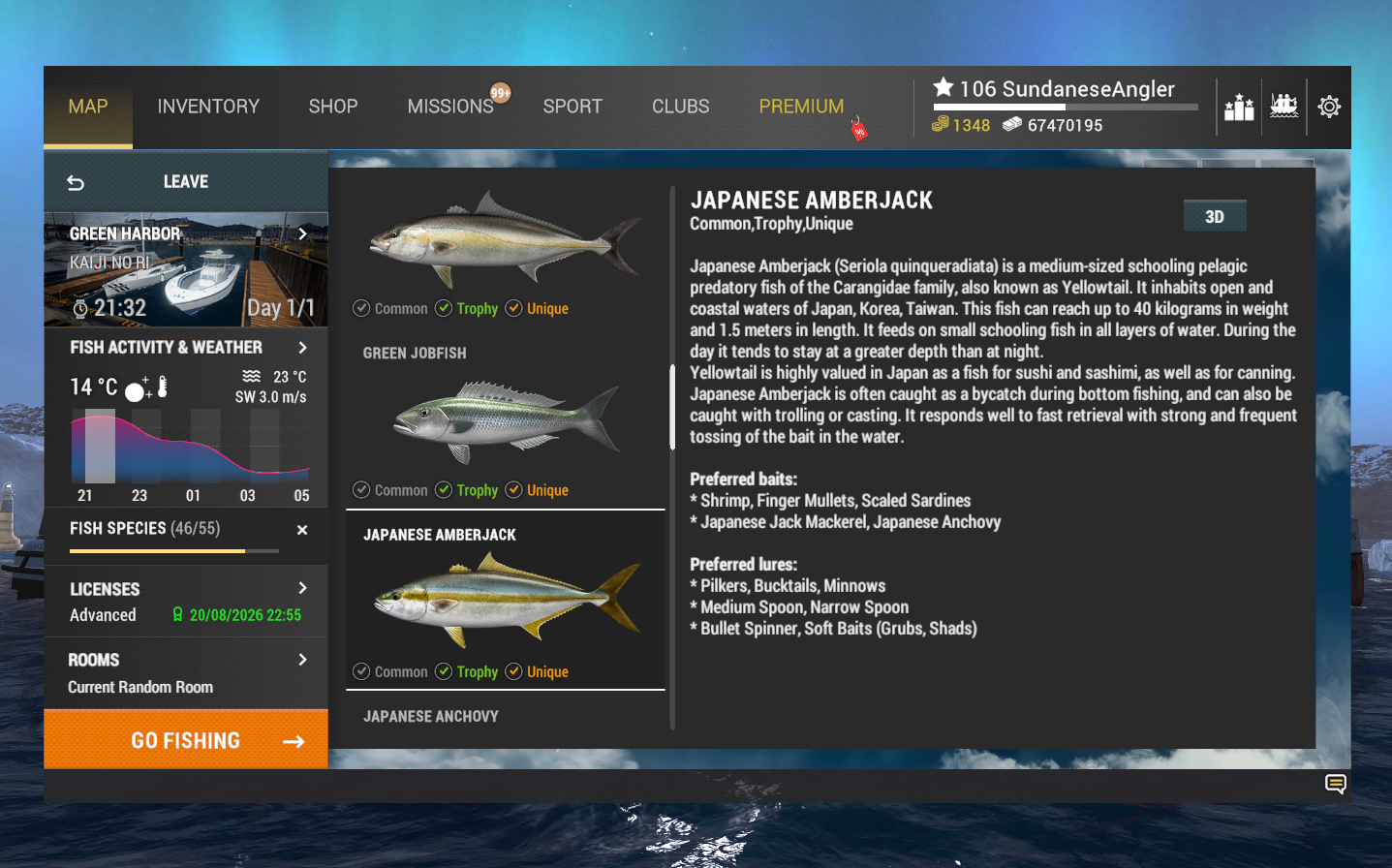
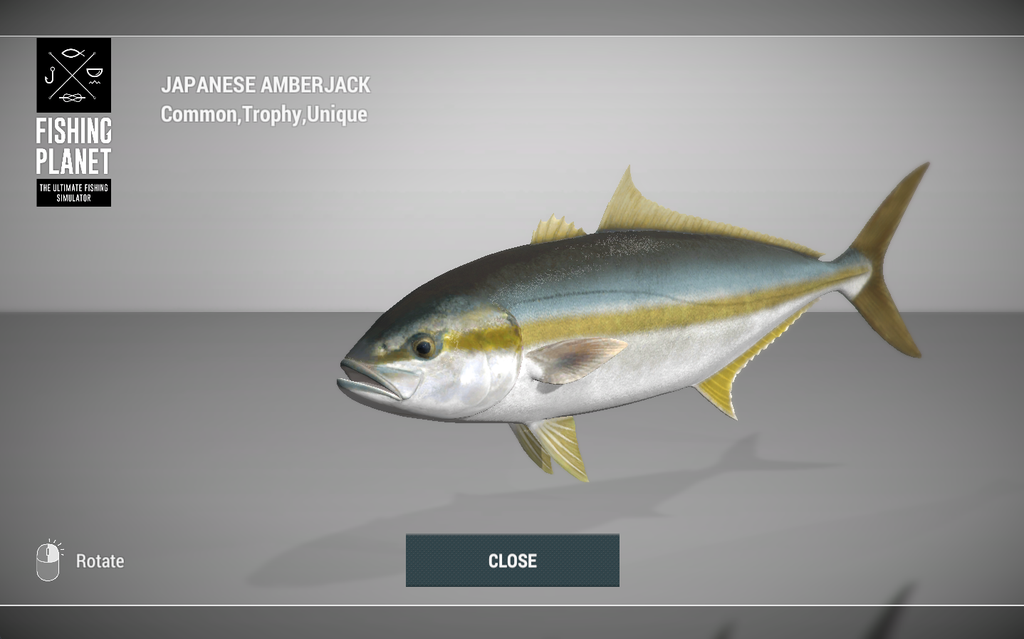
The Japanese Amberjack (Seriola quinqueradiata), also called Yellowtail, is a medium-sized schooling predator from the Carangidae family, native to the open and coastal waters of Japan, Korea, and Taiwan. In the game it reaches up to 40 kg and about 1.5 metres. It feeds on small schooling fish through all layers of the water, and it is prized in Japan as a sushi and sashimi fish. It is often picked up as a bycatch during bottom fishing, but it also takes trolled and cast lures well.
Two lines in its description shape everything about how you fish it. First, it responds well to fast retrieval, with strong and frequent tossing of the bait through the water. That tells you not to fish it slow. Second, during the day it holds deeper than it does at night. Those two facts are the whole strategy: work a lure fast, and do it at night when the fish are shallower and easier to reach. I will come back to both.
Where to Catch Japanese Amberjack at Kaiji No Ri
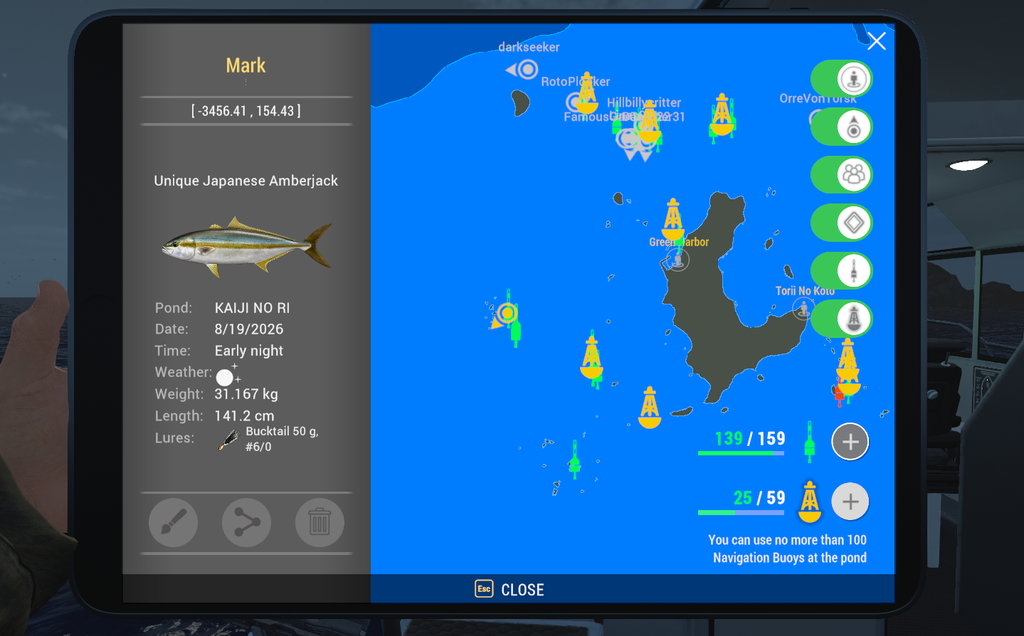
I marked and caught mine near coordinates -3456.41, 154.43, in the open water close to Green Harbor. This is a roaming, schooling fish rather than a structure hugger, so treat the coordinate as a starting area, not an exact spot. Launch from Green Harbor, get out over the open water, drop a marker buoy for reference, and cover water with your casts until you find a school. Once you hook one, others are usually nearby, so keep working the same area while the fish are there.
Best Time: Night
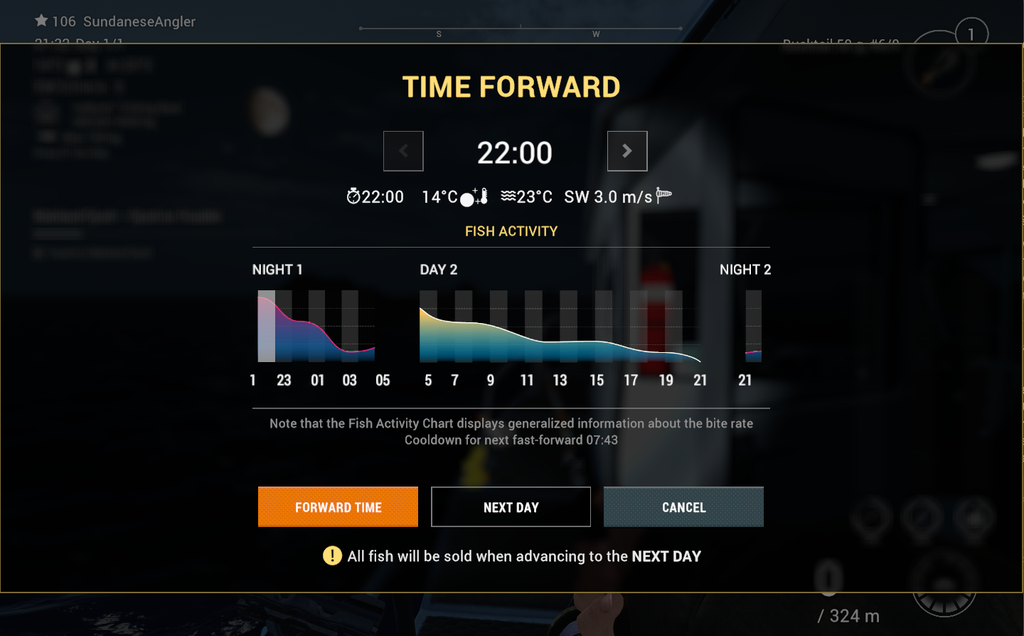
This is where the Amberjack differs from the tuna. I caught mine at 21:23, logged as Early night, at 14 degrees air and 23 degrees water with a light south westerly around 3 m/s. That lines up with the game’s own note that the fish holds deeper by day and comes shallower at night. A shallower fish is an easier fish to reach with a cast lure, so night is the window to target. If you arrive in daylight and the bite is slow, use Forward Time to reach an evening or night window rather than grinding the day. As always, avoid Next Day, which sells everything in your storage.
The Rig: Light Casting and a Bucktail
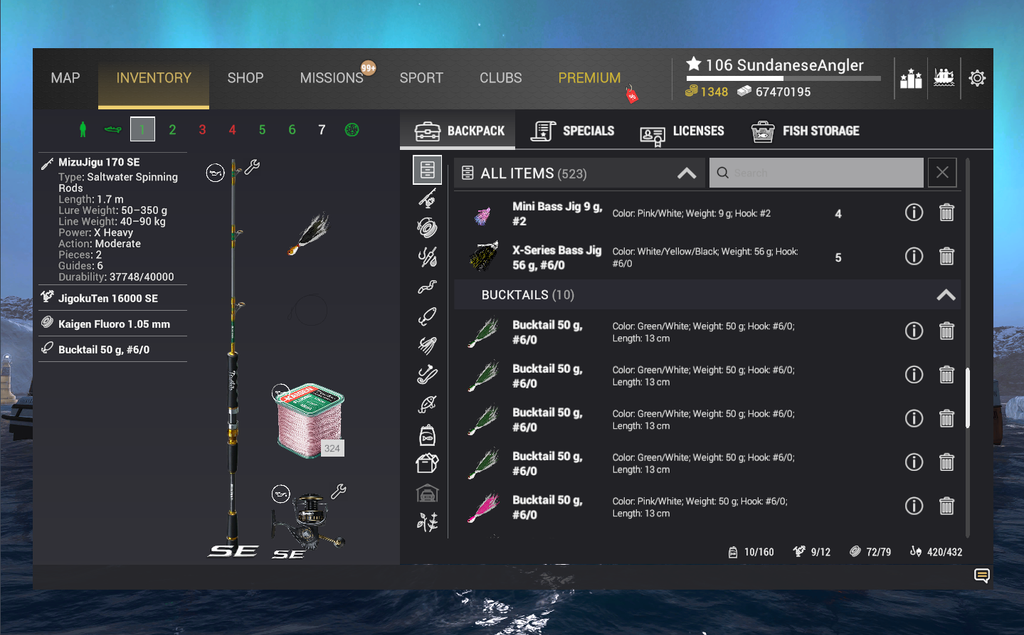
This is the exact rig that caught the fish. It is a simple casting setup with a single lure tied on, no sinker, no bait, and no leader:
- Rod: MizuJigu 170 SE
- Reel: JigokuTen 16000 SE
- Main line: Kaigen Fluoro 1.05 mm
- Lure: Bucktail 50 g, #6/0
One honest note. The MizuJigu 170 SE is an X Heavy rod, the same one I run for the Dogtooth and the tuna-family fish on this map, and it is heavier than a 31 kg Amberjack strictly needs. I use it because it is already rigged and it casts a bucktail fine, so there is no reason to swap. If you would rather enjoy a livelier fight, a lighter saltwater spinning rod would suit this fish well. The fluorocarbon main line keeps things low-visibility, which helps in clear water.
The Bucktail, and How to Work It
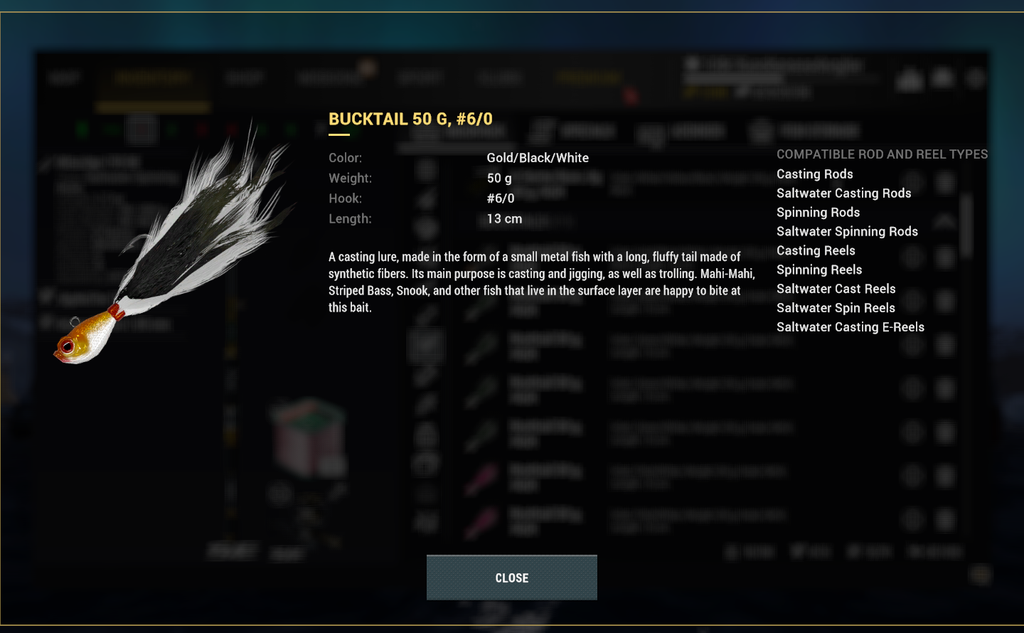
The Bucktail is a listed preferred lure for the Amberjack, so this is not a workaround, it is the right tool. It is a casting lure shaped like a small metal fish with a long, fluffy synthetic tail, built for casting, jigging, and trolling, and it draws surface-layer predators well. The Amberjack also takes Pilkers, Minnows, spoons, Bullet Spinner, and soft baits, along with natural baits like shrimp, finger mullets, and scaled sardine, so you have options, but the bucktail is what worked for me.
The technique is the part that matters most, and the game hands it to you. This fish responds to fast retrieval with strong, frequent tossing of the lure. So do not swim the bucktail back slowly and steadily. Cast it out, then work it back fast with sharp, repeated rod movements to make it dart and flash like a panicked baitfish. That aggressive action is the trigger. A slow retrieve is the single easiest way to fish this lure wrong.
Landing It
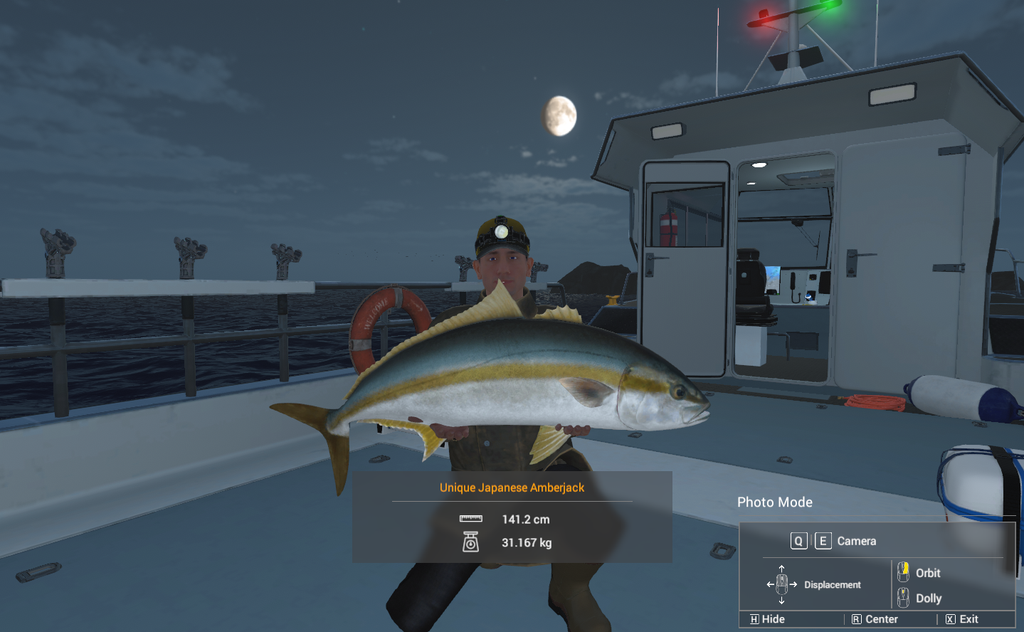
The Amberjack fights hard for its size. It is fast and it pulls, running and shaking rather than sitting heavy, so keep steady pressure and let the rod and drag do the work through its runs. On the X Heavy rig there is plenty of backbone, so a 31 kg fish comes up without much trouble once you turn its head. At this weight you lift it by hand, no crane needed. The main thing is to stay tight through the fast runs and not give it slack.
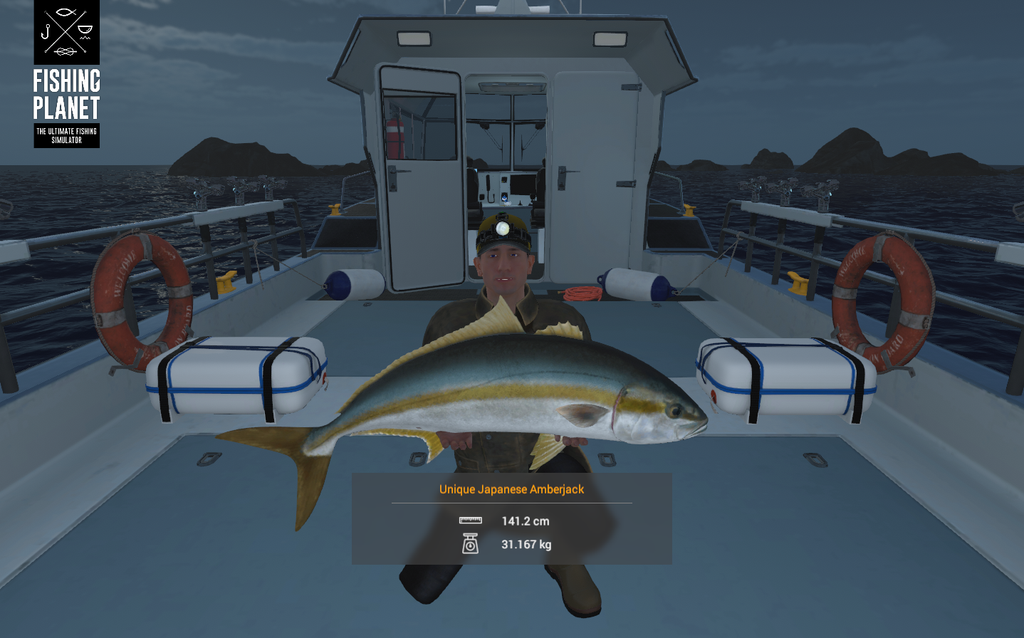
Common Mistakes
Retrieving too slowly. This is the big one. The Amberjack wants a fast, aggressive retrieve with sharp, frequent tosses of the lure. A slow, steady swim will not trigger it. Rip the bucktail back.
Fishing it by day out of habit. The fish holds deeper during the day and comes shallower at night, so it is easier to reach after dark. If the daytime bite is slow, move to a night window with Forward Time.
Sitting in one spot. This is a roaming, schooling fish. Cover water with your casts to find a school rather than parking and waiting. When you find one, work the area.
Pressing Next Day. It sells your whole storage, including a Unique. Use Forward Time to move within the same day instead.