
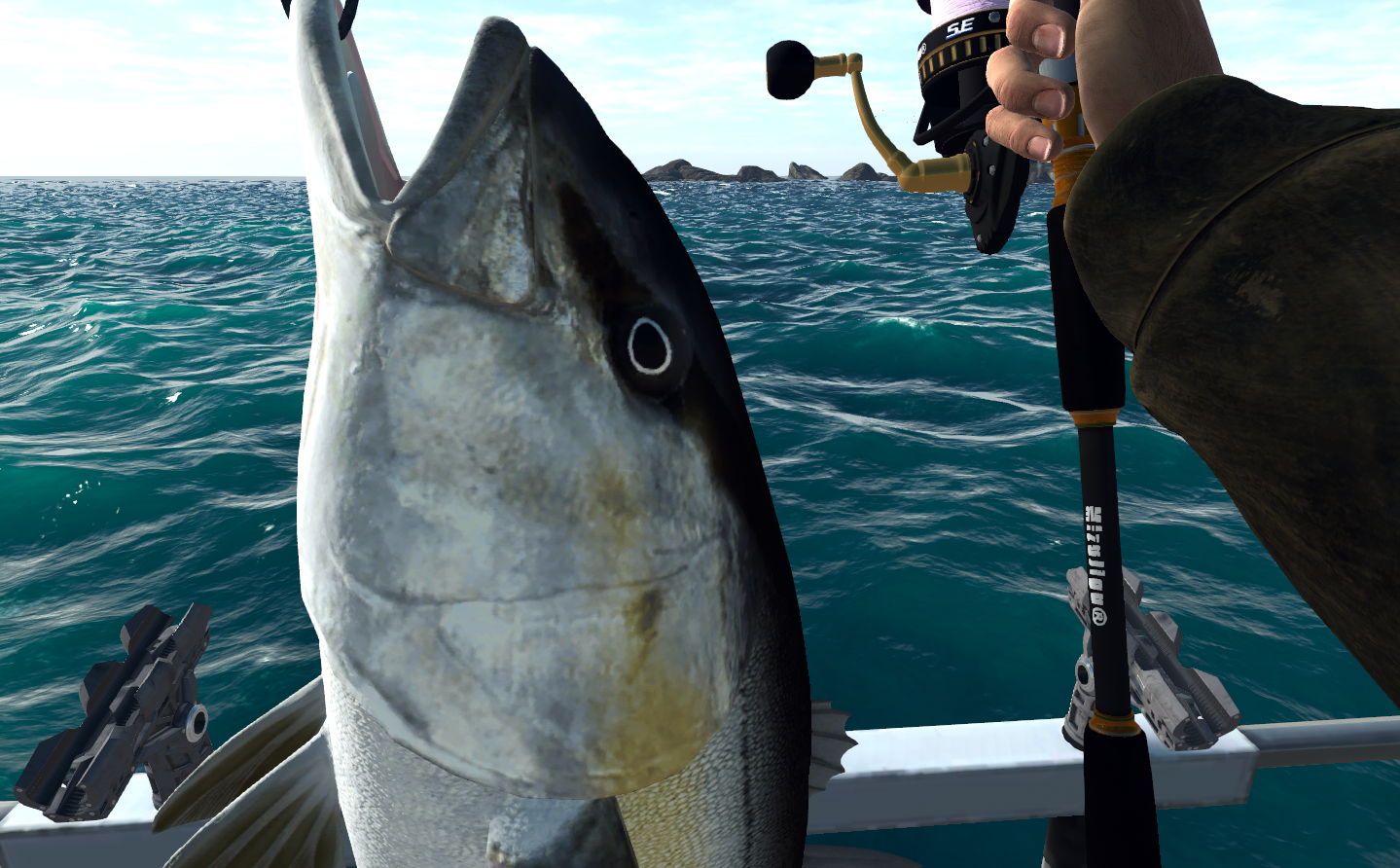
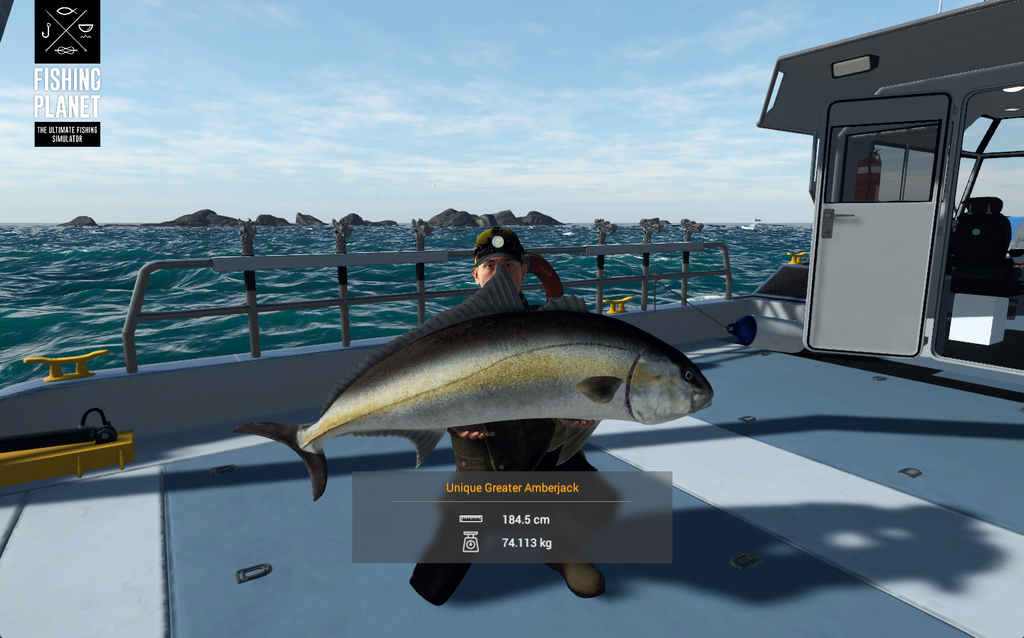
The Greater Amberjack is the big, mean cousin of the amberjack family, and it is one of the best fights at Kaiji No Ri. Anglers call it the “reef donkey” for a reason: it is stubborn, powerful, and it holds tight to structure, so landing one is real work. It also pays like a proper trophy. My Unique came in at 74.113 kg and 184.5 cm for 28,026 coins and 35,189 XP, which is one of the biggest single XP hits on the map. This guide covers the structure spot, the spoon rig, and how to win the tug of war with a fish built to dig for the reef.
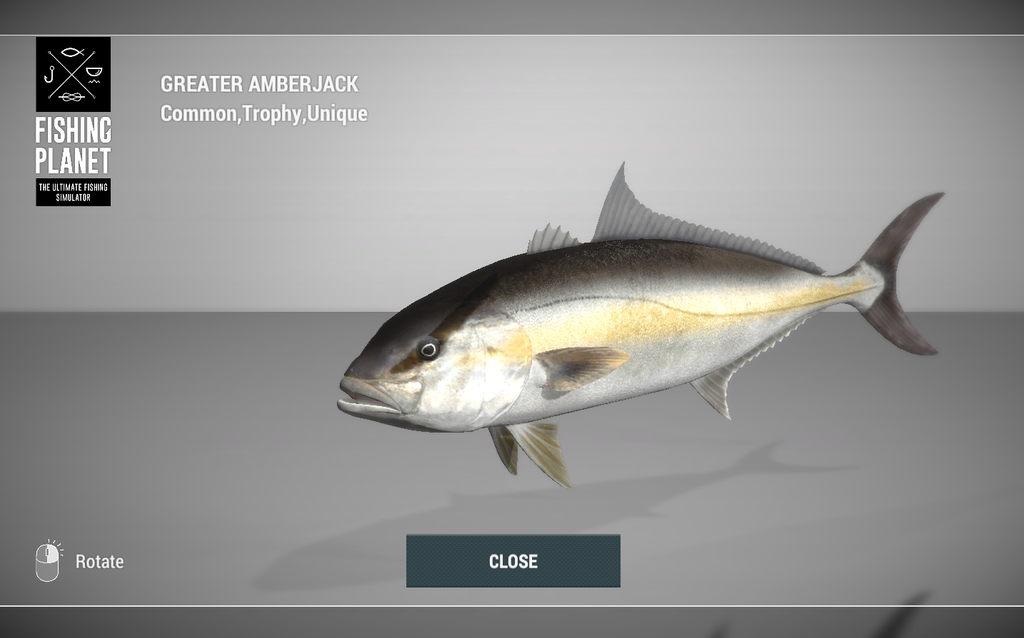
Not to Be Confused with the Japanese Amberjack
Before anything else, clear this up, because Kaiji No Ri has two amberjacks and they look alike. This is the Greater Amberjack (Seriola dumerili), the largest species of its family. It is not the same fish as my Japanese Amberjack (Yellowtail) guide. The difference matters in practice: the Greater Amberjack is far bigger (over 80 kg versus around 40 kg), pays much more, holds tight to reef structure rather than roaming open water, and fights harder. If you are after the smaller, open-water bucktail fish, read the Japanese Amberjack guide instead. If you want the heavyweight reef brawler, you are in the right place.
Why Target the Greater Amberjack?
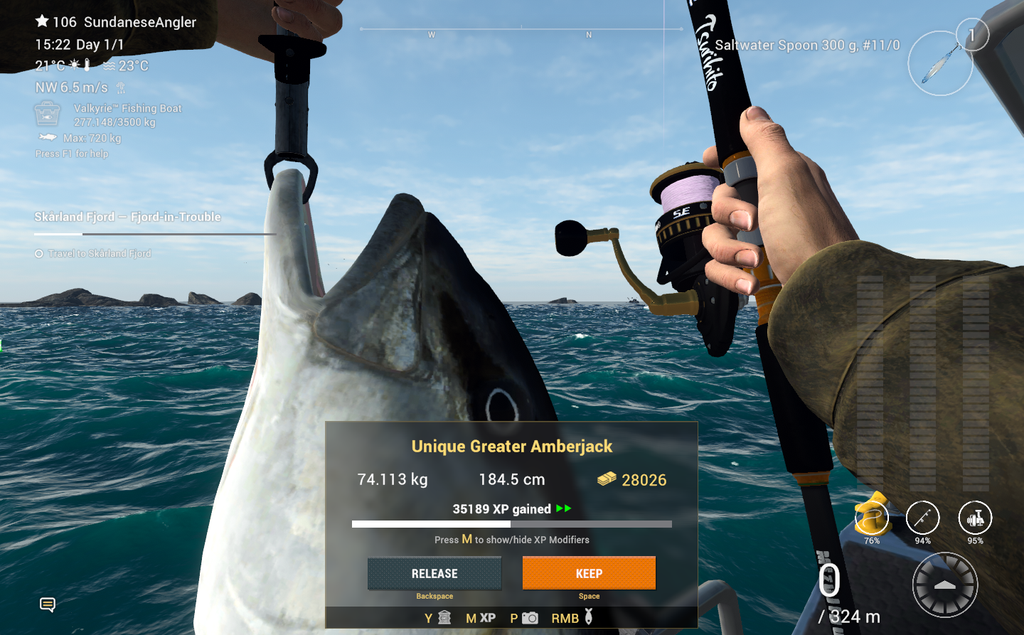
This is one of the better paying fish on the map. My Unique returned 28,026 coins and 35,189 XP in a single catch, putting it right up near the Dogtooth Tuna and well ahead of most of the Kaiji No Ri species. The XP in particular is excellent. The fish reaches over 80 kg, so my 74 kg Unique was near, but not at, the top of its range, and an even bigger one would pay more. If you are grinding coins or levels, the Greater Amberjack is a genuine target, not a filler catch.
Beyond the payout, it earns its place on reputation. The reef donkey is famous for a stubborn, grinding fight, so it is satisfying to land in a way the smaller fish here are not. This is a trophy you work for.
It sits in my Kaiji No Ri cluster with my Yellowfin Tuna, Striped Marlin, Albacore, Dogtooth Tuna, Japanese Amberjack, Striped Bonito, Bigfin Reef Squid, Giant Trevally, and Giant Grouper guides.
About the Greater Amberjack
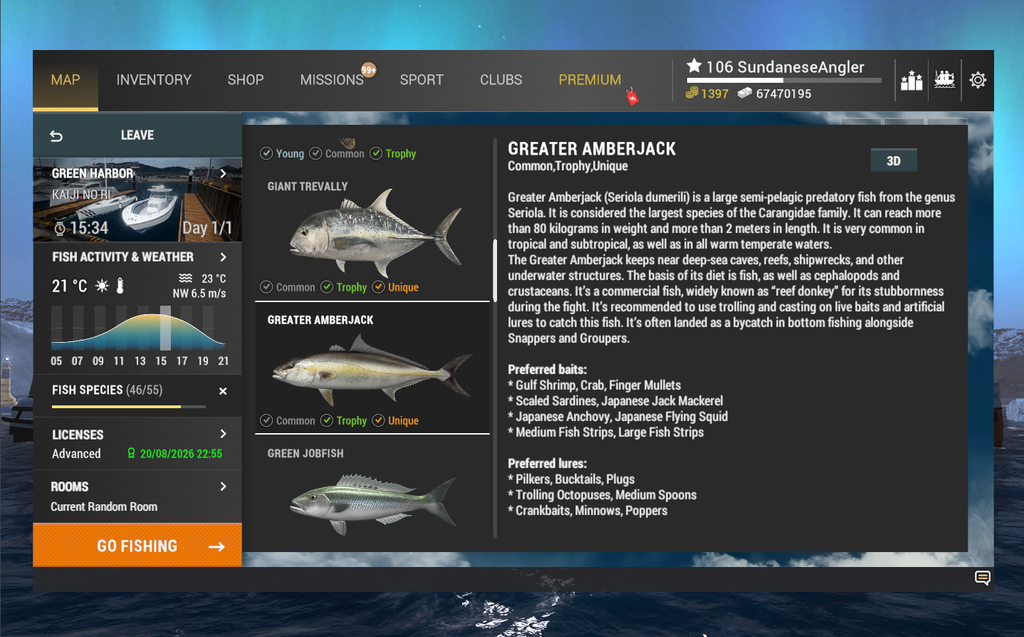
The Greater Amberjack (Seriola dumerili) is a large semi-pelagic predator and the biggest member of the Carangidae family, reaching more than 80 kg and over two metres. It is common across tropical, subtropical, and warm temperate waters, and it holds near deep-sea caves, reefs, shipwrecks, and other underwater structure. It eats fish, cephalopods, and crustaceans, and it is often landed as a bycatch in bottom fishing alongside Snappers and Groupers. The game recommends trolling and casting with live baits and artificial lures.
The nickname is the key to its character. It is called the reef donkey for its stubbornness during the fight, and that stubbornness comes with a habit: like other structure fish, it wants to dig back down into the reef and rocks that it lives in. That single fact shapes how you have to fight it, and I will come back to it.
Where to Catch Greater Amberjack at Kaiji No Ri
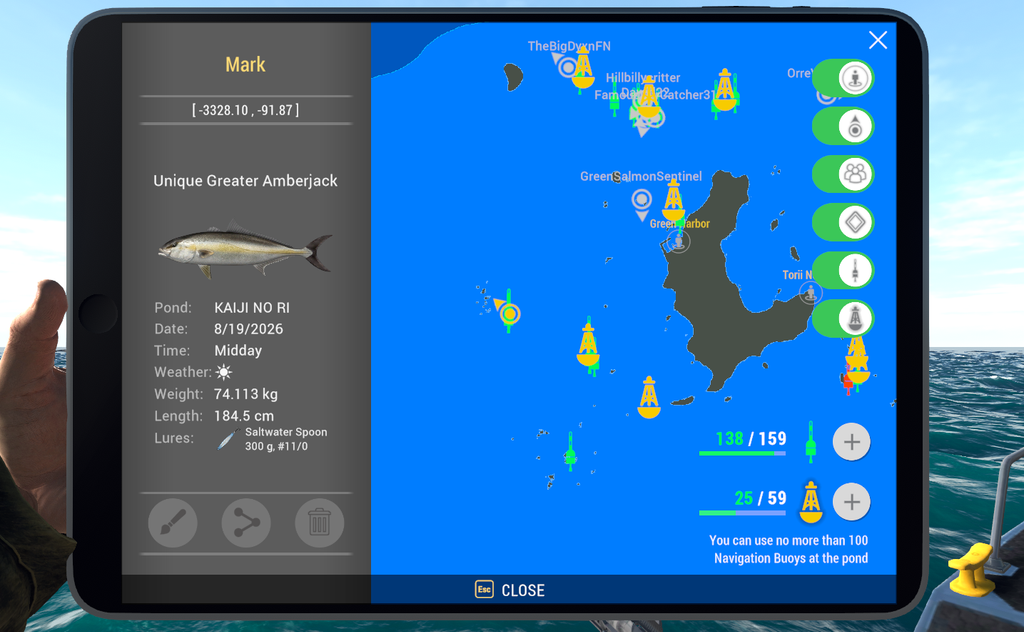
I marked and caught mine near coordinates -3328.10, -91.87, close to Green Harbor. The important thing is not the exact pixel but the type of water: this is a structure fish, so fish it near the rocky islands, reef edges, and underwater structure rather than out in the open trolling lanes. This puts it closer to the water where I catch the Dogtooth Tuna and the reef squid than to the open-water tuna runs. Launch from Green Harbor, work the structure, and drop a marker buoy once you find fish so you can stay on them.
Best Time: Midday
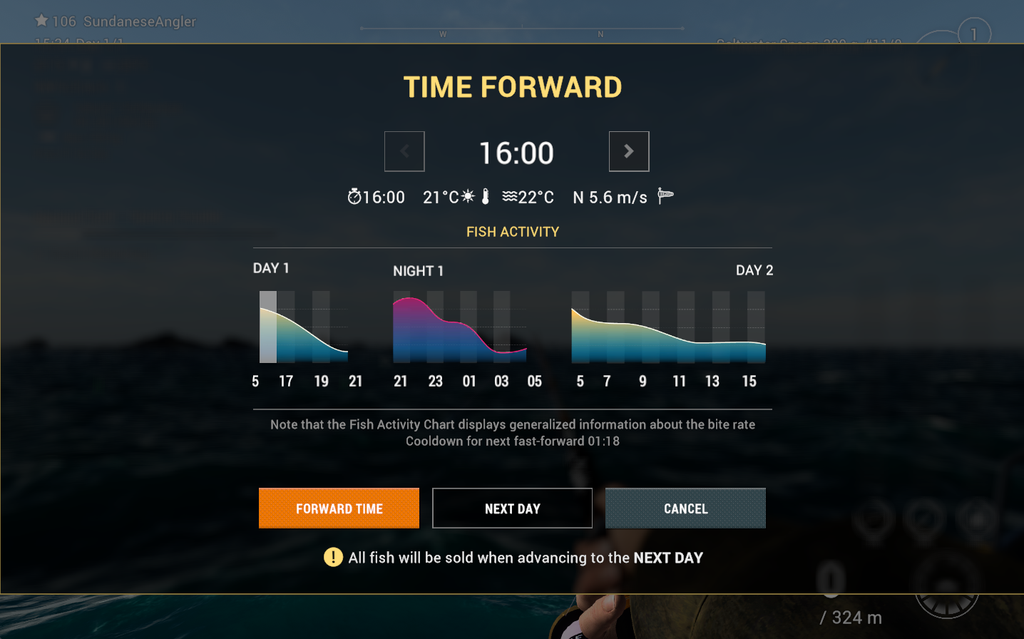
I caught mine at 15:22, logged as Midday, under clear sun at 21 degrees air and 23 degrees water with a light north westerly around 6.5 m/s. So daytime works well for this fish, which is a contrast with the Japanese Amberjack that came on for me at night. Check the activity chart before you commit, and use Forward Time to reach a stronger window rather than grinding a flat stretch. As always, avoid Next Day, which sells your whole storage.
The Rig: Heavy Casting and a Saltwater Spoon
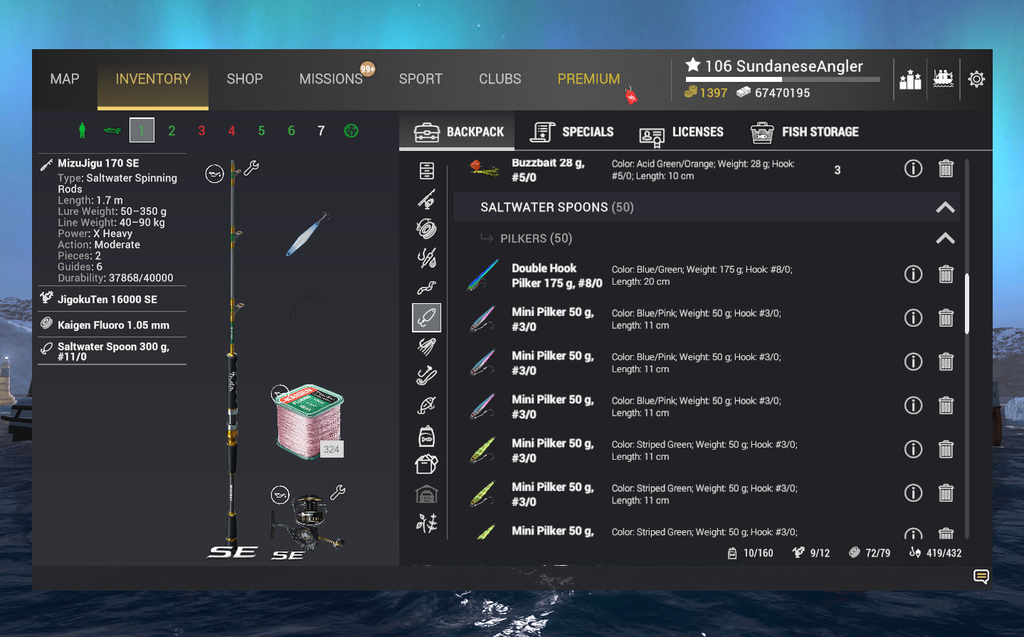
This is the exact rig that caught the fish. It is a single-lure casting setup, no sinker, no bait, and no leader:
- Rod: MizuJigu 170 SE
- Reel: JigokuTen 16000 SE
- Main line: Kaigen Fluoro 1.05 mm
- Lure: Saltwater Spoon 300 g, #11/0
Here is an honest note that separates this fish from the lighter amberjack. The MizuJigu 170 SE is an X Heavy rod, and for a 74 kg reef donkey that is not overkill, it is exactly right. Where I called this same rod too much gun for the small Striped Bonito, here you want every bit of that backbone to keep a big, stubborn fish out of the structure. Do not go light for this one. The heavy fluorocarbon main line also gives you a margin if the fish does reach the rocks.
The Lure: Saltwater Spoon
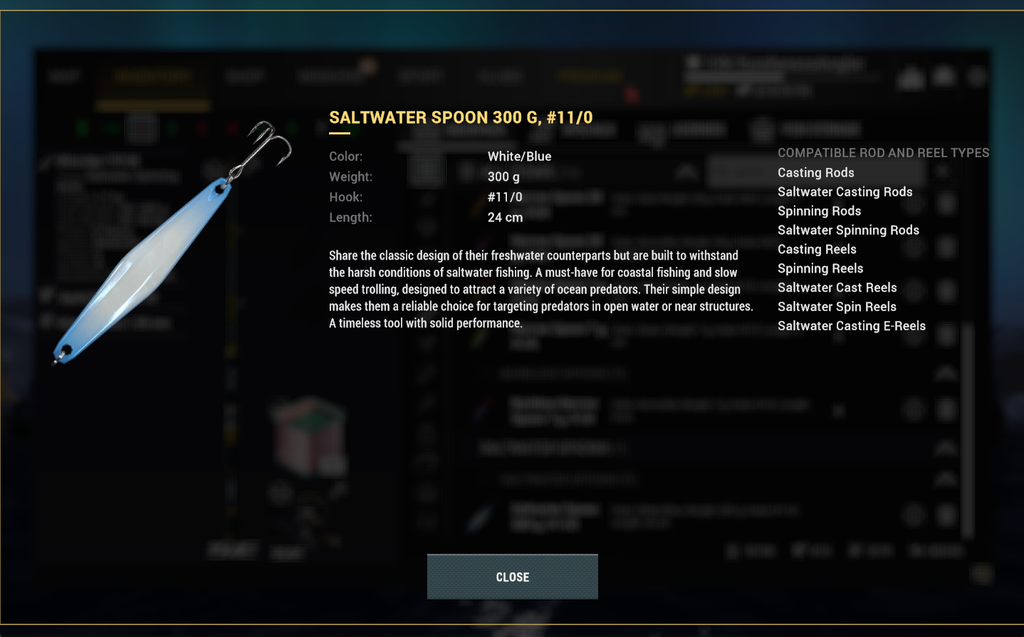
I caught mine on a 300 g Saltwater Spoon. The game describes these as a saltwater-built version of the classic freshwater spoon, made for coastal fishing and slow-speed trolling, and reliable for predators in open water or near structure. Spoons sit among the Greater Amberjack’s preferred lures, so this is a sensible choice rather than a fluke. The fish also favours Pilkers, Bucktails, Plugs, Trolling Octopuses, Crankbaits, Minnows, and Poppers, plus baits like Gulf Shrimp, Crab, and fish strips, so you have plenty of options. But the heavy spoon worked cleanly for me around structure, and it is what I would tie on again.
Landing the Reef Donkey
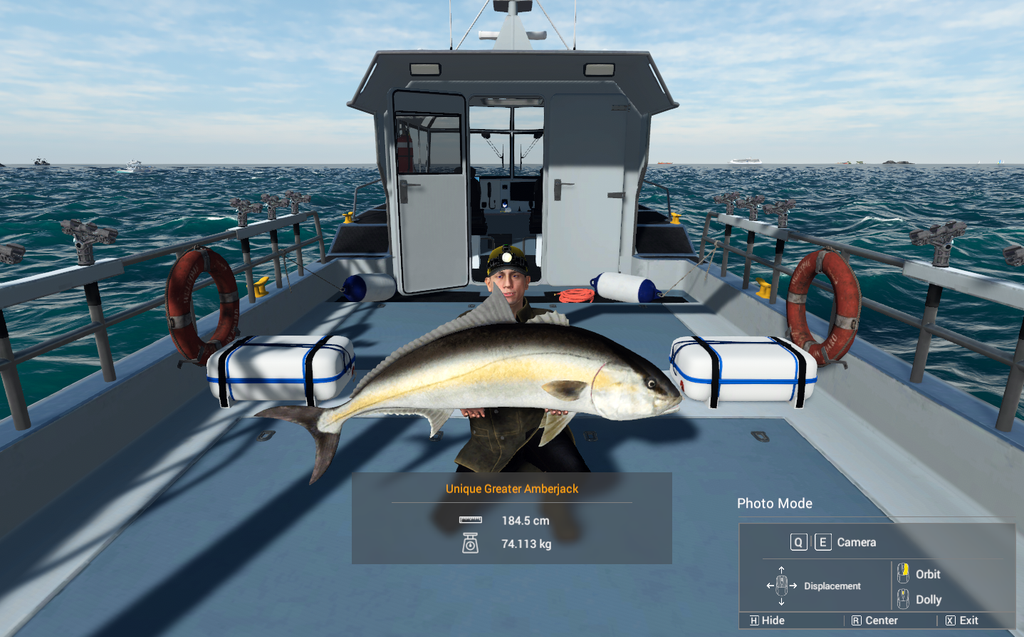
This is where the reef donkey earns its name. It resists hard and it tries to bull its way back down into the reef and structure it lives in, so the fight is a grinding tug of war. The plan is the same as any structure fish: keep firm, steady pressure and try to turn its head up and away from the rocks, and do not give it slack to work with. Let the drag handle its runs rather than cranking against it, but keep the fish coming up. At 74 kg the heavy rig has the muscle to win that battle if you stay patient and do not let it reach the structure. Once it is up and clear, bring it aboard.
Common Mistakes
Letting it reach structure. This is the big one. The reef donkey bulls for the reef and rocks to break you off. Keep steady pressure and turn its head up and away before it gets there.
Going too light. A 74 kg fish that fights this stubbornly needs a heavy rod. This is not the fish for light tackle. Bring the X Heavy rig and heavy line.
Fishing open water. The Greater Amberjack holds near reefs, caves, and structure, not out in the open trolling lanes where the tuna roam. Fish the structure.
Confusing it with the Japanese Amberjack. They are different fish with different sizes, spots, and payouts. If you wanted the smaller open-water Yellowtail, see that guide instead.
Pressing Next Day. It sells your whole storage, including a hard-won trophy. Use Forward Time to move within the same day.