
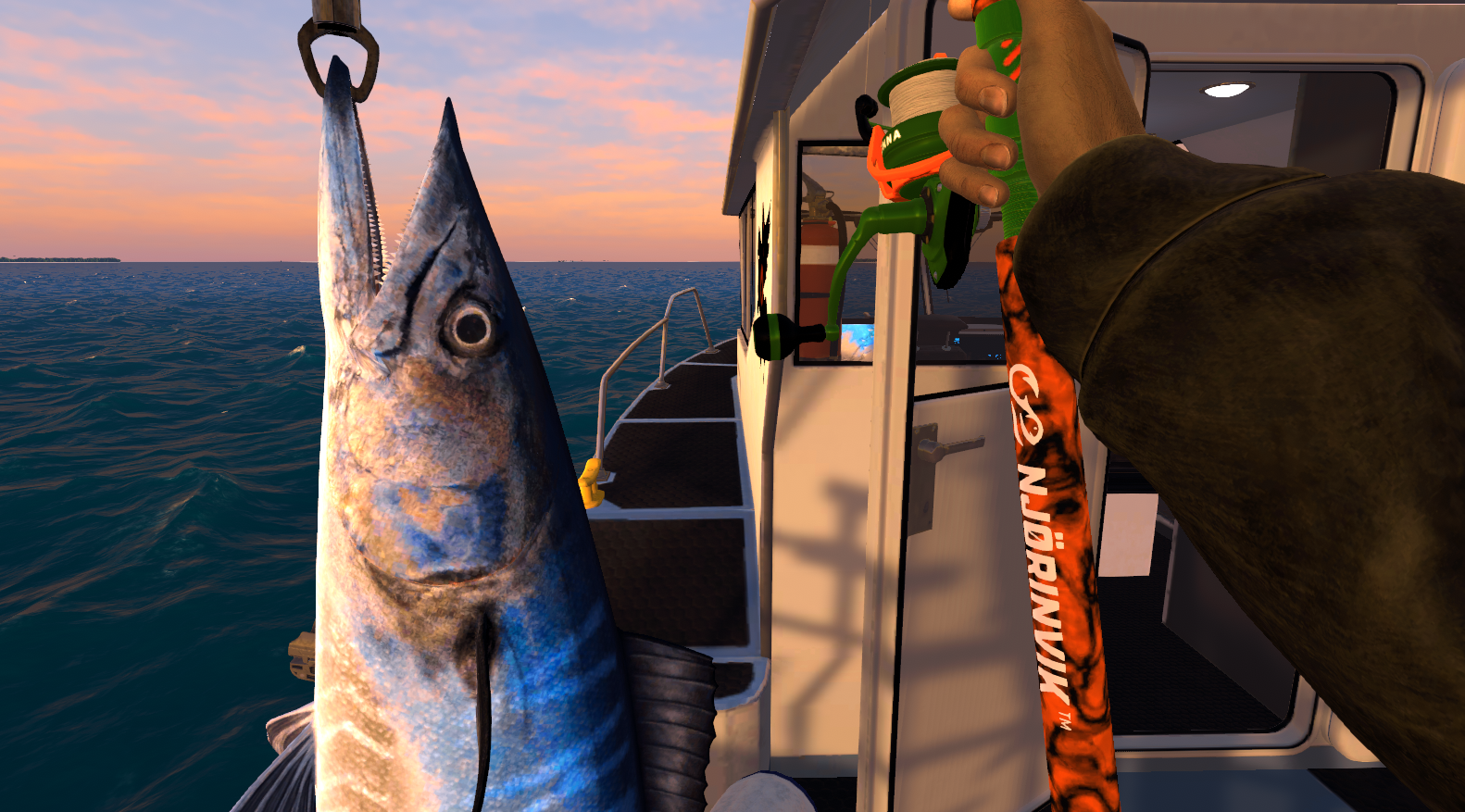
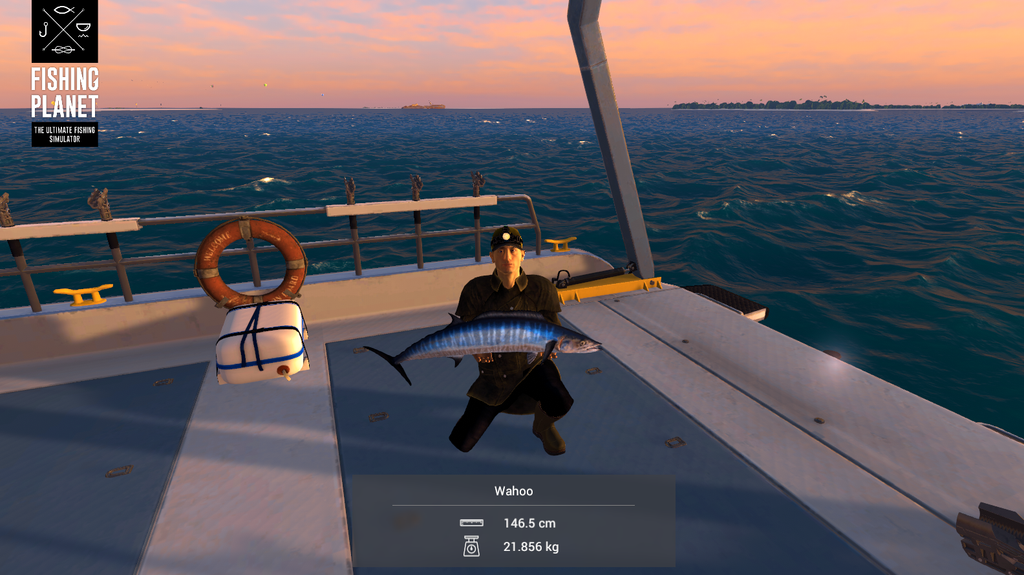
The Wahoo is the fish that makes Noomaa Kuda Atholhu worth fishing the surface for. It is a fast, savage open-ocean predator that ambushes a topwater popper and then tears off at speed, and it pays far better than the King Mackerel I started this map with. My catch was a Trophy at 21.856 kg and 146.5 cm, worth 10,480 coins and 3,329 XP on a Stealth Popper. This guide covers the popper rig, the open-water spot, the timing, and how to fight a fish built for speed.
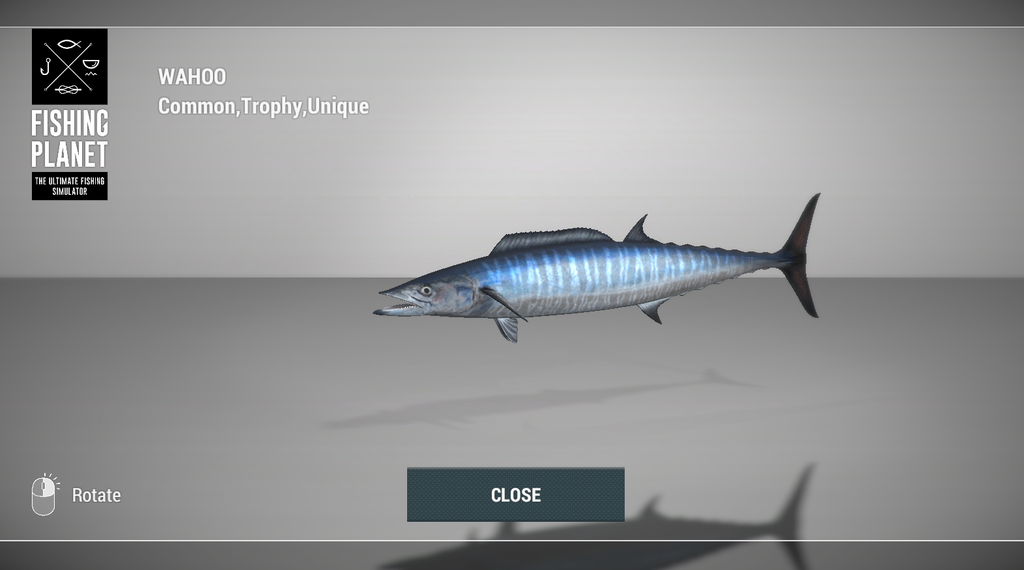
Why Target the Wahoo?
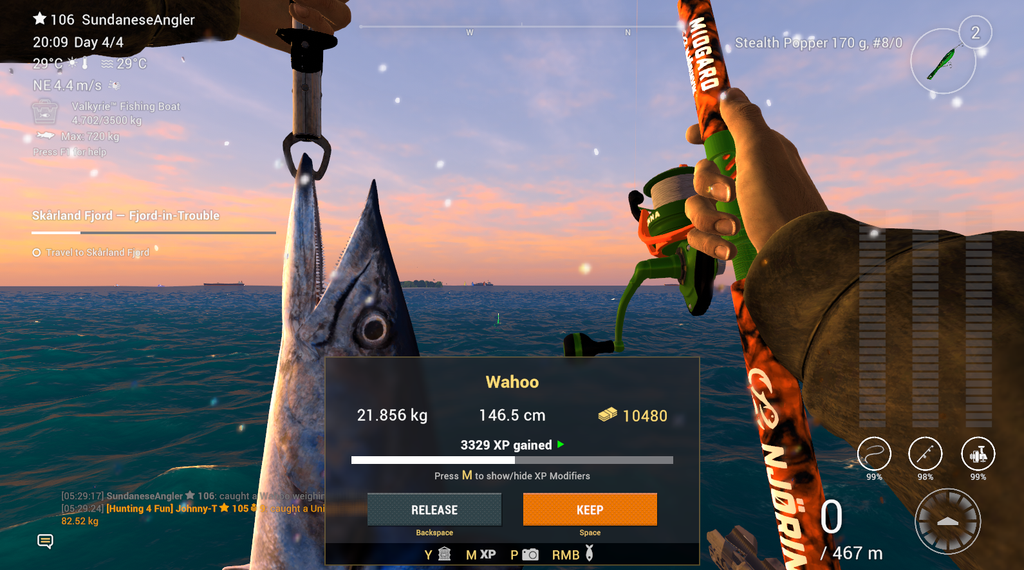
My Trophy paid 10,480 coins and 3,329 XP, which is a solid mid-tier return and a big step up from the small King Mackerel Common I caught on this map. The species reaches around 80 kg, so my 21 kg Trophy was well short of the ceiling, and a Unique or a bigger fish would pay considerably more. As a coin target on this atoll it is genuinely worth your time, not a filler catch.
The bigger draw is how it fights. The Wahoo is one of the fastest fish in the ocean, and hooking one on a surface popper gives you an explosive take followed by a blistering run. If you like active, visual fishing where you watch the strike happen on top of the water, this is the best fish on the map for it so far.
It sits in my Noomaa Kuda Atholhu cluster alongside my Indo-Pacific King Mackerel guide. As I add more species from this map, I will link them here so you can move between the guides.
About the Wahoo
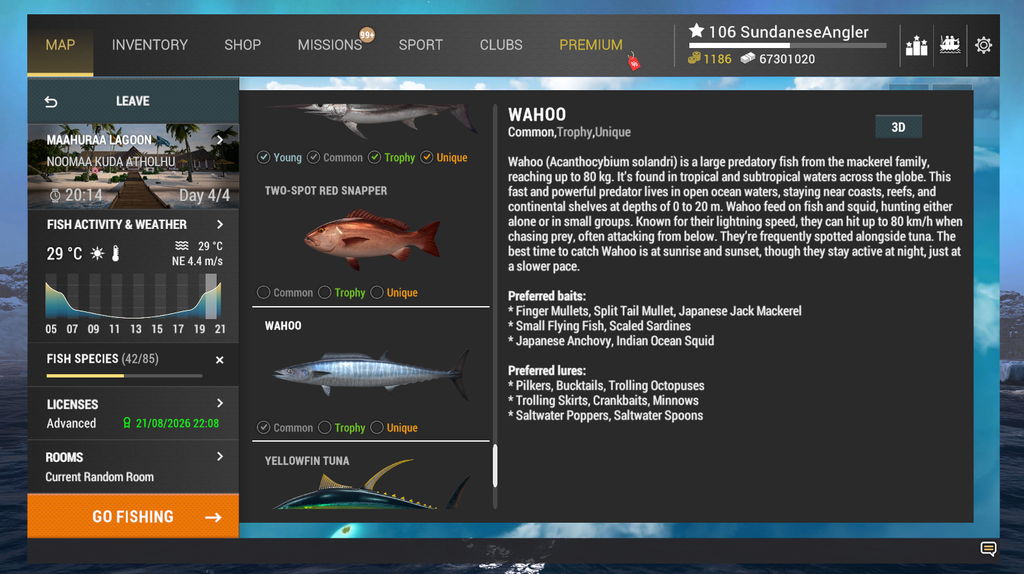
The Wahoo (Acanthocybium solandri) is a large predatory fish from the mackerel family, reaching up to 80 kg. It is found in tropical and subtropical waters across the globe, living in open ocean but staying near coasts, reefs, and continental shelves at shallow depths of 0 to 20 metres. It feeds on fish and squid, hunting either alone or in small groups, and it is famous for its lightning speed: it can hit up to 80 km/h chasing prey, often attacking from below. In the game they are frequently spotted alongside tuna.
Two lines in its description shape how you fish it. First, it attacks from below, which is exactly why a surface popper works so well: the commotion on top pulls the fish up into a strike. Second, the best time to catch Wahoo is at sunrise and sunset, though they stay active at night at a slower pace. Its preferred lures include Pilkers, Bucktails, Trolling Octopuses, Trolling Skirts, Crankbaits, Minnows, Saltwater Poppers, and Saltwater Spoons, and its preferred baits include Finger Mullets, Split Tail Mullet, Japanese Jack Mackerel, Small Flying Fish, Scaled Sardines, Japanese Anchovy, and Indian Ocean Squid. I went with a popper, which is the most exciting way in.
Level and License: What You Need to Fish Here
Noomaa Kuda Atholhu is a Level 94 map, so you need to reach level 94 before you can fish it. There are two starting points, Maahuraa Lagoon and Kuda Veli, and I launched from Maahuraa Lagoon for this catch. As with the King Mackerel, if you want to keep Trophy and Unique fish or fish from a boat, you need the Advanced License rather than the Basic one, which has keep restrictions and no boat fishing. I was on the Advanced License for this trip.
Where to Catch Wahoo at Noomaa Kuda Atholhu
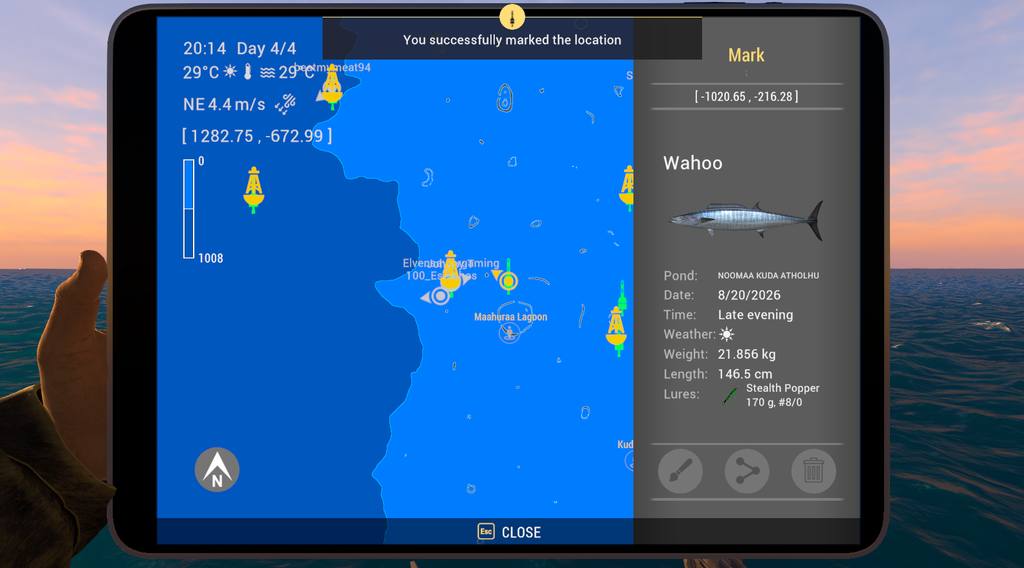
I marked and caught mine near coordinates -1020.65, -216.28, out in the open water off Maahuraa Lagoon. This is an open-ocean fish that holds near coasts and reefs, so fish the open water around the atoll rather than tight against the shore, and work the popper across the surface. This is almost the same water where I caught the King Mackerel, which makes sense: both are fast pelagics that hunt the open water off the lagoon. Drop a marker buoy once you get a strike, because Wahoo can hunt in small groups and you may pick up more from the same area.
Best Time: Sunrise and Sunset
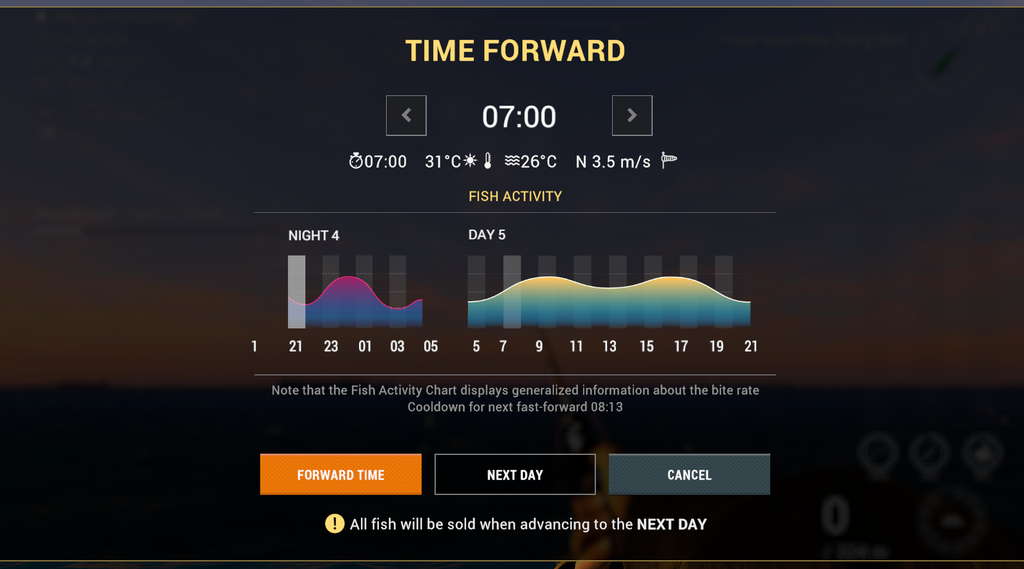
I caught mine at 20:14 on Day 4, in the late evening around sunset, at 29 degrees with clear weather and a light NE breeze at 4.4 m/s. That lines up with the game’s own note that Wahoo bite best at sunrise and sunset. They stay active at night but at a slower pace, so the dawn and dusk windows are the ones to target. Check the activity chart before you settle in, and use Forward Time to reach a sunrise or sunset window if the water is quiet. As always, avoid Next Day, which sells your whole storage.
The Rig: A Topwater Popper Setup
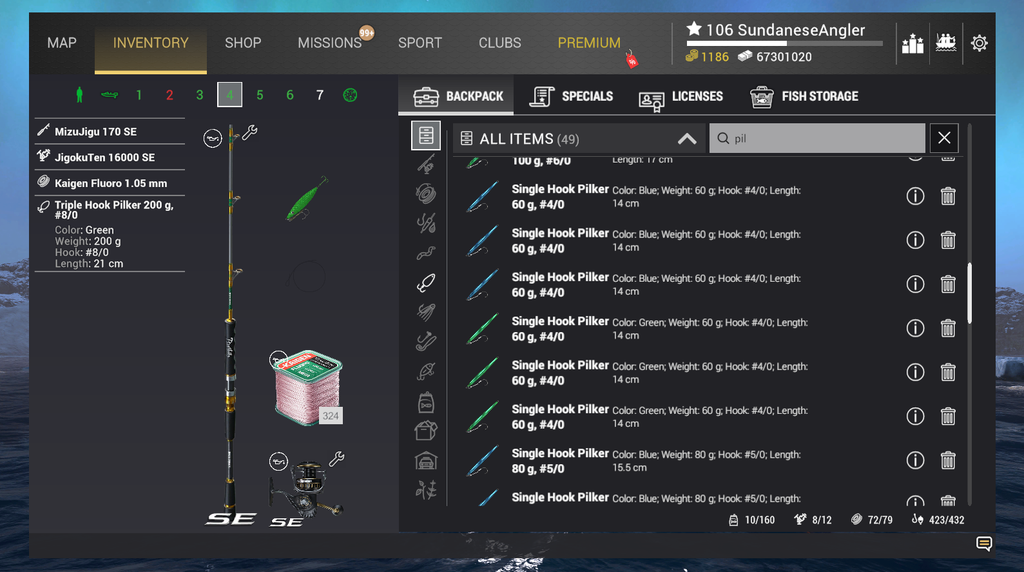
This is the exact rig that caught the fish. It is a single-lure topwater casting setup, with no sinker, no bait, and no leader, since the popper carries its own hook:
- Rod: MizuJigu 170 SE
- Reel: JigokuTen 16000 SE
- Main line: Kaigen Fluoro 1.05 mm
- Lure: Stealth Popper 170 g, #8/0 (Green)
This is the same X Heavy topwater outfit I run for surface predators, and it has the backbone to work a big popper and drive the hook home on a hard strike. The heavy fluorocarbon main line gives you a margin against a fish that runs this fast. If you fish other maps, this is the same popper approach that works on the Mahi-Mahi and Dogtooth Tuna, just applied to the open water off this atoll.
The Popper and How to Work It
The Stealth Popper is a listed preferred lure for the Wahoo, so it is the right tool rather than a workaround. A popper sits on the surface, and when you twitch the rod its cupped face pushes water and makes a splashing, popping action that mimics a fleeing or wounded baitfish. That commotion is exactly what pulls a below-attacking hunter like the Wahoo up to strike. Cast it out, let it settle, then work it back in sharp twitches with pauses so it chugs and spits across the top. The Wahoo also takes trolling lures like octopuses and skirts if you prefer to troll, but the popper is the most exciting way to catch it and it is what worked for me.
Landing It
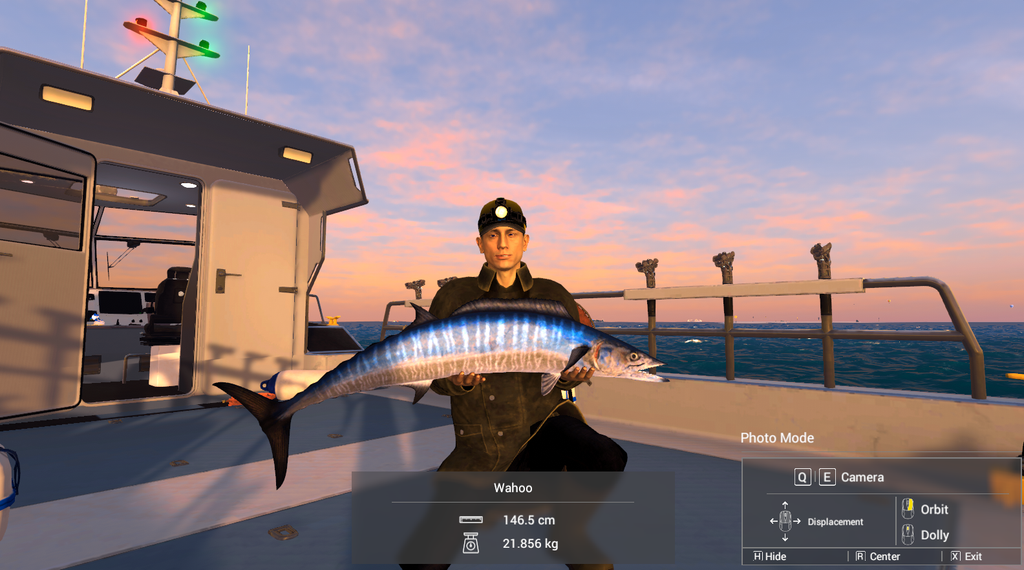
The Wahoo’s whole game is speed. It hits hard and makes fast, powerful runs rather than sitting heavy, so keep steady tension and let the drag handle the runs instead of cranking against them. Do not give it slack, especially on a popper, because a surface hook can throw if the line goes loose. On the X Heavy rig there is plenty of power for a 21 kg fish, so once you tire it out it comes up cleanly, and at this weight you can lift it by hand, no crane needed.
Common Mistakes
Fishing the wrong time. The Wahoo bites best at sunrise and sunset and slows down at night. If the bite is dead, use Forward Time to reach a dawn or dusk window rather than grinding a flat stretch.
Working the popper too gently. The splashing action is what draws the fish up from below. Twitch it sharply so it chugs and spits across the surface, do not swim it back quietly.
Giving slack line. A fast fish on a surface popper throws the hook if the line goes loose. Keep steady pressure through the runs.
Fishing tight to shore. This is an open-ocean predator. Work the open water around the atoll, not the shallows against the beach.
Pressing Next Day. It sells your whole storage, including a Trophy. Use Forward Time to move within the same day instead.