
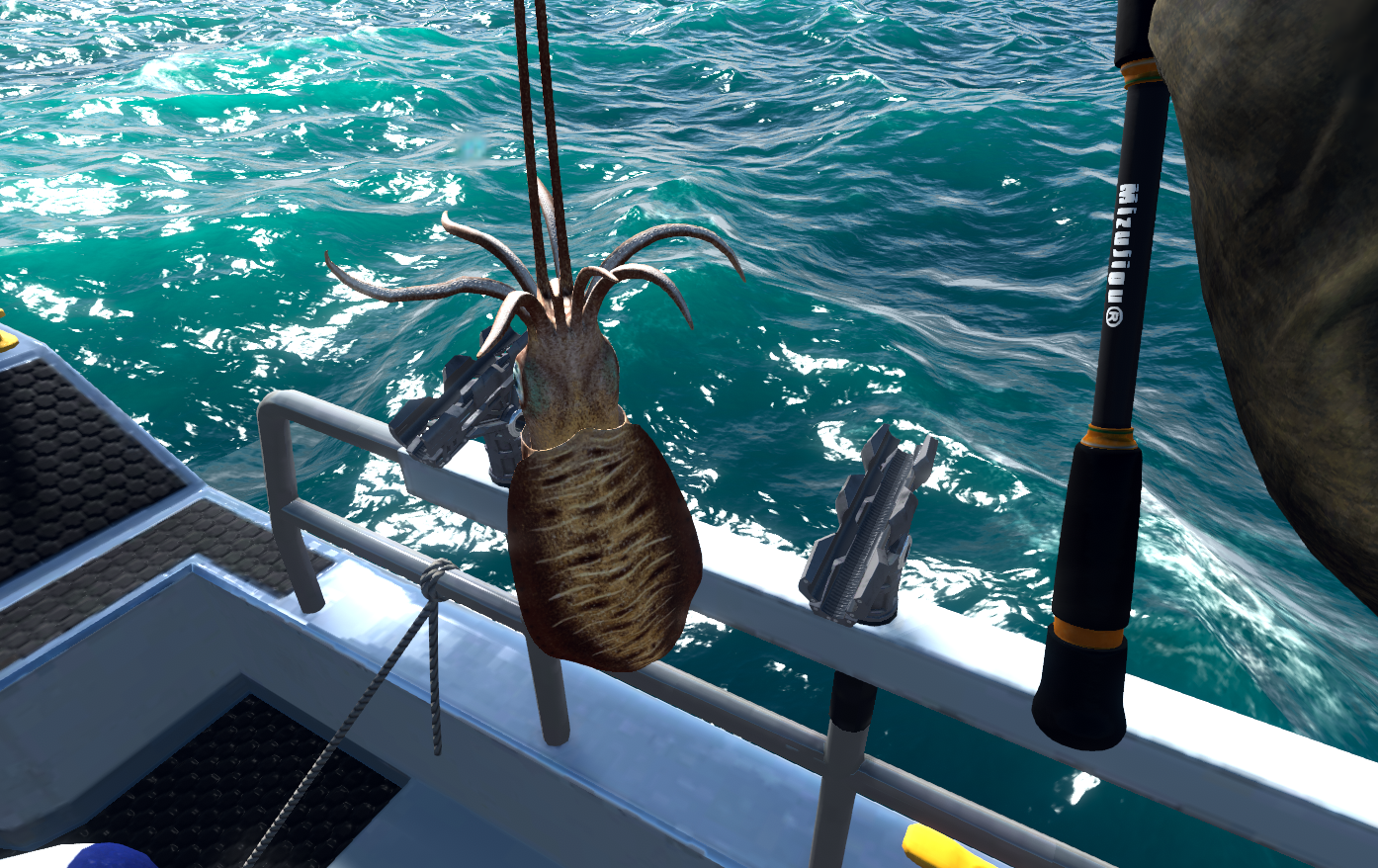
The Bigfin Reef Squid is not a payday. My Trophy paid just 1,148 coins, the smallest return of anything I have caught for this site. So why write it up? Because it is a completely different style of fishing from everything else at Kaiji No Ri. This is light squid jigging with a spinning rod, not big-game trolling or heavy bottom work, and it is a genuinely relaxing change of pace. It is also a species you will want on your list. I landed mine at 1.103 kg and 55.7 cm. This guide covers the light rig, the squid jig technique that actually matters, and honest expectations.
What to Expect: A Change of Pace, Not a Payday
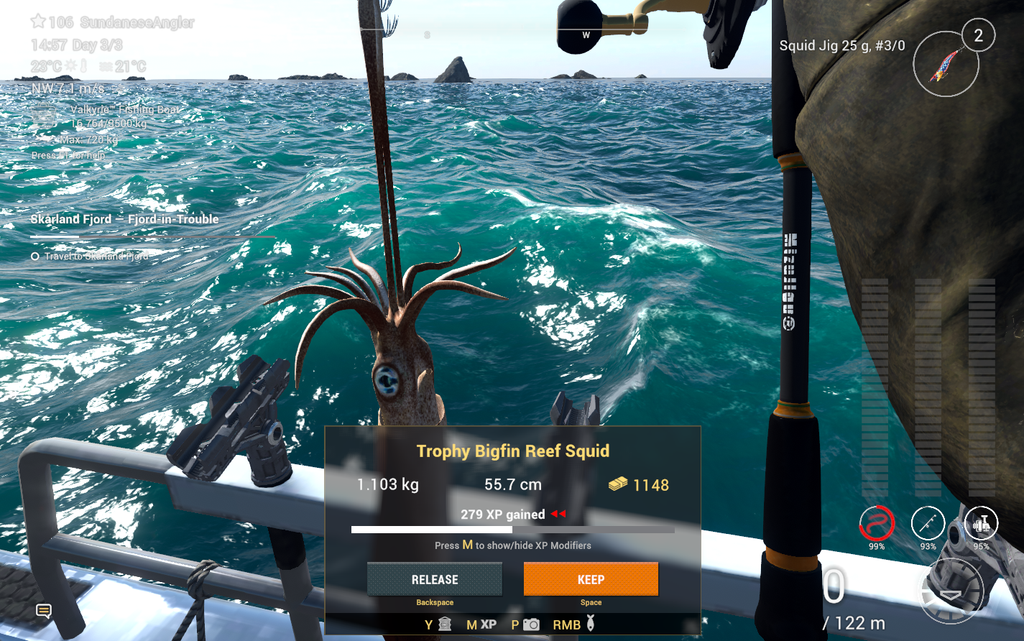
Let me be honest about the numbers, because they are small. My Trophy paid 1,148 coins and 279 XP. The squid tops out at around 2 kg, so there is no big version waiting to change that math. If coins are your goal, troll the open water for Yellowfin Tuna and Striped Marlin instead, which pay tens of thousands.
The reason to fish it is variety. After hours of heavy trolling and big-game fights, dropping a light spinning rod and jigging for squid near the rocks is a genuinely different, low-stakes way to spend a session. It is also a species tick and a fun novelty, since not every map lets you catch a squid at all. Treat it as a relaxing side activity rather than a target you grind.
This sits in my Kaiji No Ri cluster with my Yellowfin Tuna, Striped Marlin, Albacore, Giant Trevally, and Giant Grouper guides. It is the odd one out, and that is exactly its appeal.
About the Bigfin Reef Squid
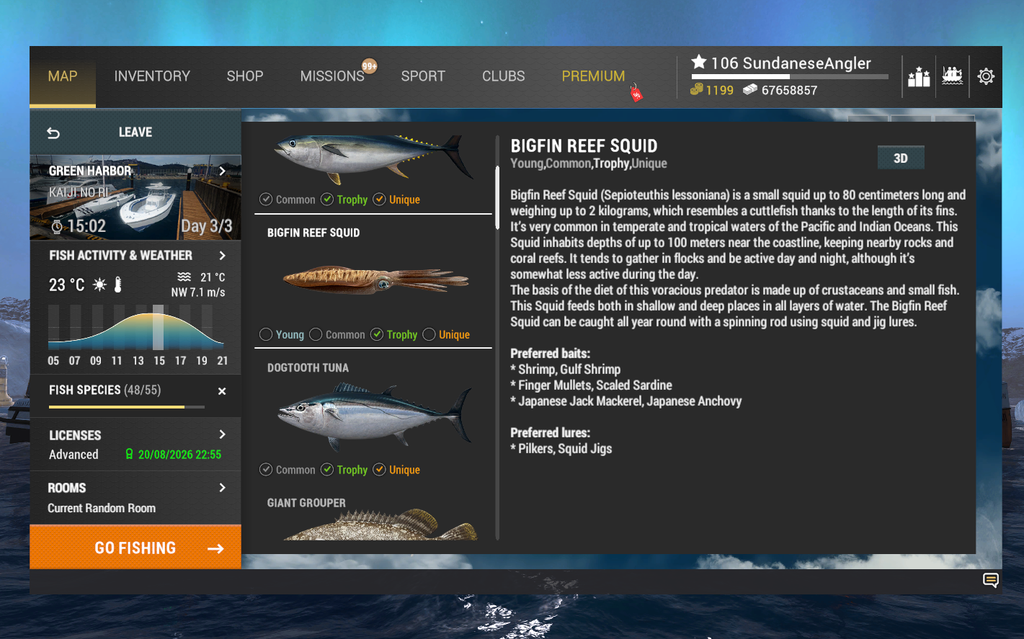
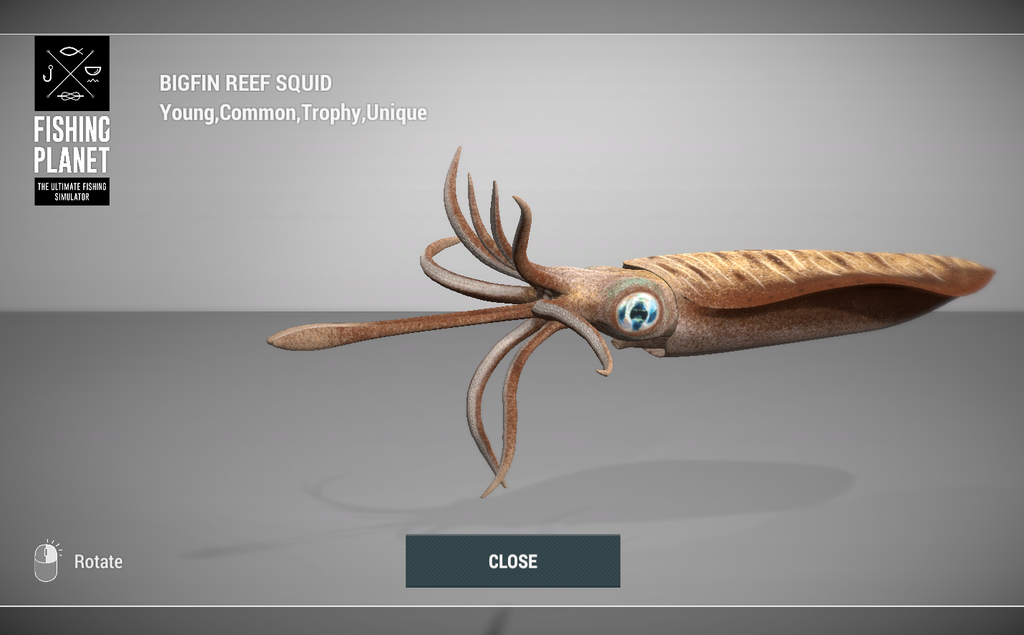
The Bigfin Reef Squid is a small squid, up to about 80 cm and 2 kg, that looks a little like a cuttlefish because of the length of its fins. It is common in the temperate and tropical Pacific and Indian Oceans, and it lives near the coastline at depths of up to 100 metres, holding around rocks and coral reefs. It gathers in flocks and is active day and night, though the game notes it is somewhat less active during the day. Despite its size it is a voracious predator, feeding on crustaceans and small fish through all layers of the water.
The single most useful line in its description is the last one: the Bigfin Reef Squid can be caught all year round with a spinning rod using squid and jig lures. That tells you the entire approach. This is not a bait-on-the-bottom fish or a trolled one. It is a light spinning and jigging target, and the rig reflects that.
Where to Catch Bigfin Reef Squid at Kaiji No Ri
I do not have an exact coordinate to give you for this one, so I will be straight about that rather than invent a number. What I can tell you is where the squid holds, which matters more than a single pixel anyway. Unlike the tuna and marlin that roam the open water, the Bigfin Reef Squid stays near the coastline around rocks and reefs. I caught mine near the rocky islands rather than out in open water, which lines up with the game’s own description of where it lives.
So fish structure, not open water. Work the light rig near the rocky shorelines and reef edges off Green Harbor, and jig around that structure rather than trolling across open sea. The squid feeds through all layers, so vary your jig depth until you find them. If you have a rocky mark from a previous session, that is where to start.
Timing: I Caught Mine by Day, But Night May Be Better
Here is an honest timing note. I caught mine at 14:57 in the afternoon, at 23°C air and 21°C water with a north westerly around 7.1 m/s. So daytime clearly works. But the game specifically says the squid is somewhat less active during the day. That is a hint worth acting on: if daytime jigging is slow, switch to a night session, where the squid should be more willing.
Because it feeds around the clock, you can catch squid any time, so there is no wrong hour, only a better one. Use Forward Time to reach a night window if the day is quiet, and as always, avoid Next Day, which sells your storage.
The Rig: Light Spinning and a Squid Jig
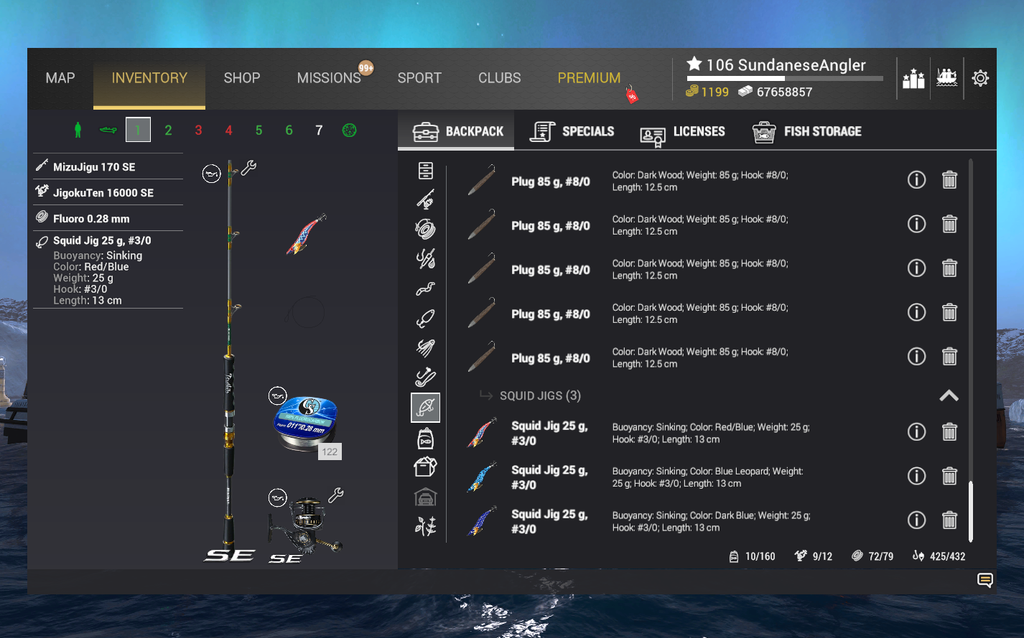
This is the exact rig that caught the squid. Notice how light it is compared to everything else on this map, because you are targeting a 1 kg animal, not a 150 kg marlin:
- Rod: MizuJigu 170 SE
- Reel: JigokuTen 16000 SE
- Main line: Fluoro 0.28 mm, 122 m spooled
- Lure: Squid Jig 25 g, #3/0
There is no teaser, no sinker, and no bait here. It is a simple spinning setup with a single squid jig tied on. The fluorocarbon main line is a good choice for its low visibility around clear reef water, and the light rod lets you feel and work a small jig properly. If you have been fishing the heavy trolling and bottom rigs, this will feel almost delicate by comparison, which is the whole idea.
The Squid Jig, and the One Rule That Matters

The Squid Jig is worth understanding, because how it hooks a squid is different from a normal lure and it changes how you fish. It is a front-loaded jig shaped and coloured like a shrimp, with big eyes and little feathery legs. Instead of a normal hook, it has two crowns of barbless spikes. When a squid attacks the lure, those spikes catch and hold its tentacles.
Here is the rule that follows from that design, and it is the single most important technique point for squid. Because the spikes are barbless, they hold the squid only as long as there is tension. The game warns that the lack of barbs makes the squid easy to unhook but also easy to lose, so while you are fighting one, your line must not go slack even for a second. Keep steady, constant pressure from the moment it grabs the jig until it is on the boat. Let the line go slack and the squid simply slides off the spikes and is gone. That one habit, never letting the line drop, is most of what separates a landed squid from a lost one.
The squid also lists Pilkers among its preferred lures, and it will take baits like Shrimp, Gulf Shrimp, Finger Mullets, Scaled Sardine, Japanese Jack Mackerel, and Japanese Anchovy. But the squid jig is the classic, purpose-built tool for the job, and it is what caught mine.
Landing the Squid
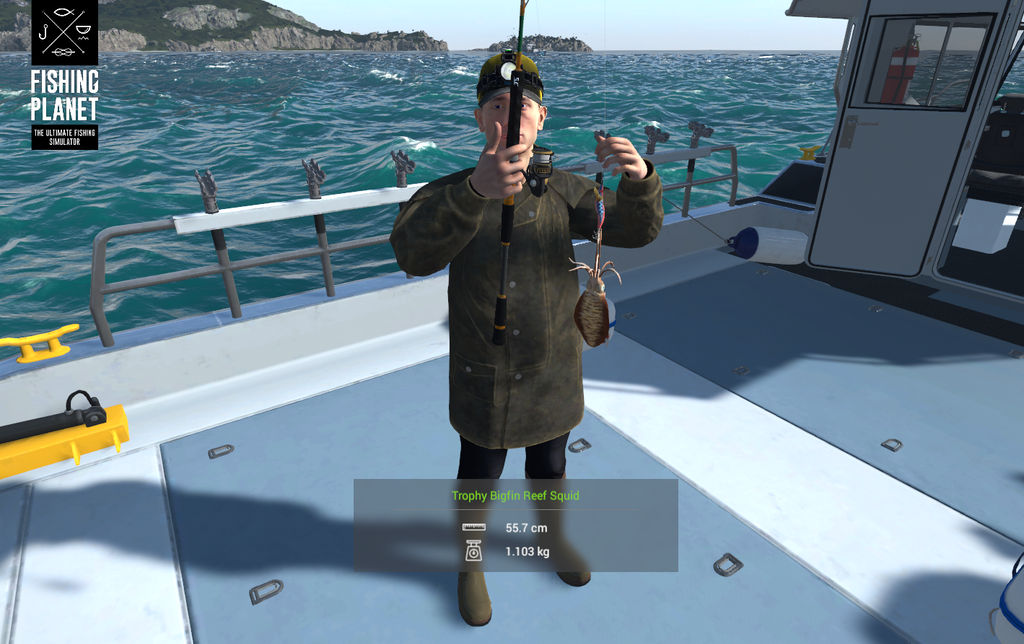
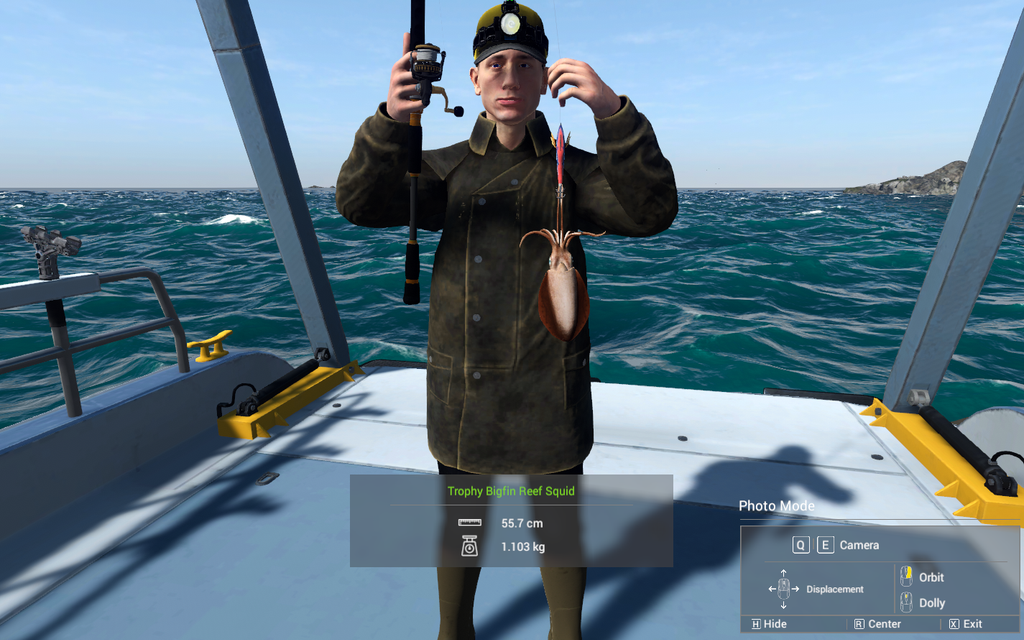
Landing a squid is not about power, it is about consistency. There is no crane and no long fight here; the squid is small enough to lift by hand. The only real risk is the one already covered: if your line goes slack, the barbless jig lets go and the squid escapes. So keep light, constant tension all the way to the boat, do not pump the rod hard, and do not pause. Play it smoothly and steadily and it comes aboard without drama.
Common Mistakes
Letting the line go slack. This is the big one. The squid jig is barbless, so any slack lets the squid slip free. Keep constant tension from the strike to the boat.
Fishing open water. The squid holds near the coastline around rocks and reefs, not out where the tuna and marlin roam. Fish the structure.
Using heavy gear. This is a 1 kg animal. The marlin rig is absurd overkill. Use the light spinning setup and a squid jig.
Expecting a payday. At around 1,000 coins, this is a novelty and a species tick, not an earner. Fish it for the change of pace, not the money.
Only fishing by day. The squid is less active during the day. If the afternoon is slow, try a night session.
Pressing Next Day. It sells your whole storage. Use Forward Time instead.