
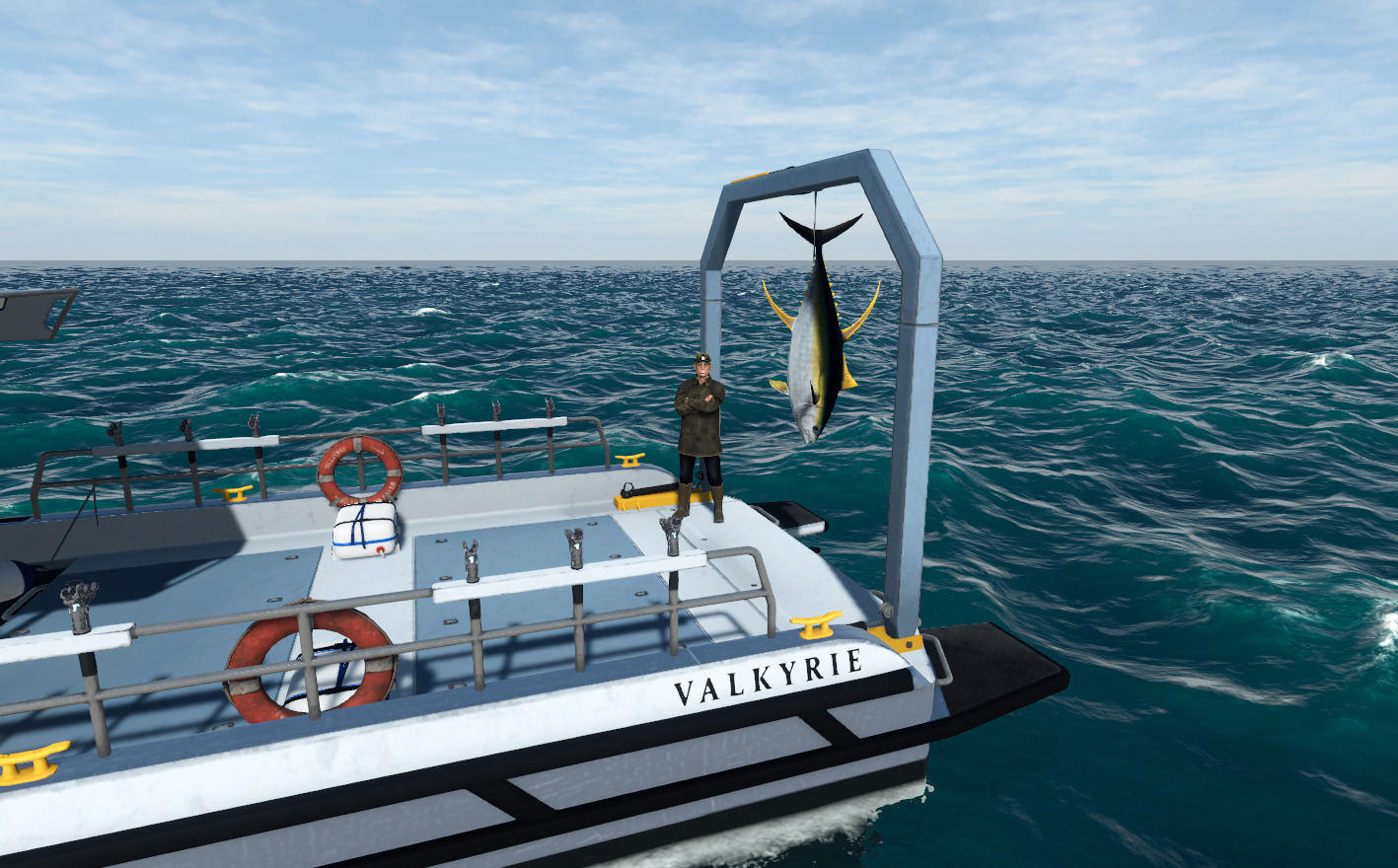
This is the first trolling guide on the site, and the Yellowfin Tuna is the perfect fish to start with. Everything about it is different from the deep bottom fishing I do at Skårland Fjord. There is no sinker, no bait sitting on the seabed, no long wait in the dark. Instead you put lures in the water, get the boat moving, and let a fast, hard-running pelagic fish hammer them in broad daylight. My Unique came in at 181.350 kg and 234.5 cm for 87,390 coins and 60,279 XP. This guide covers the Kaiji No Ri spot, the trolling rig, and how the squid chain and plug work together.
Why Target the Yellowfin Tuna?
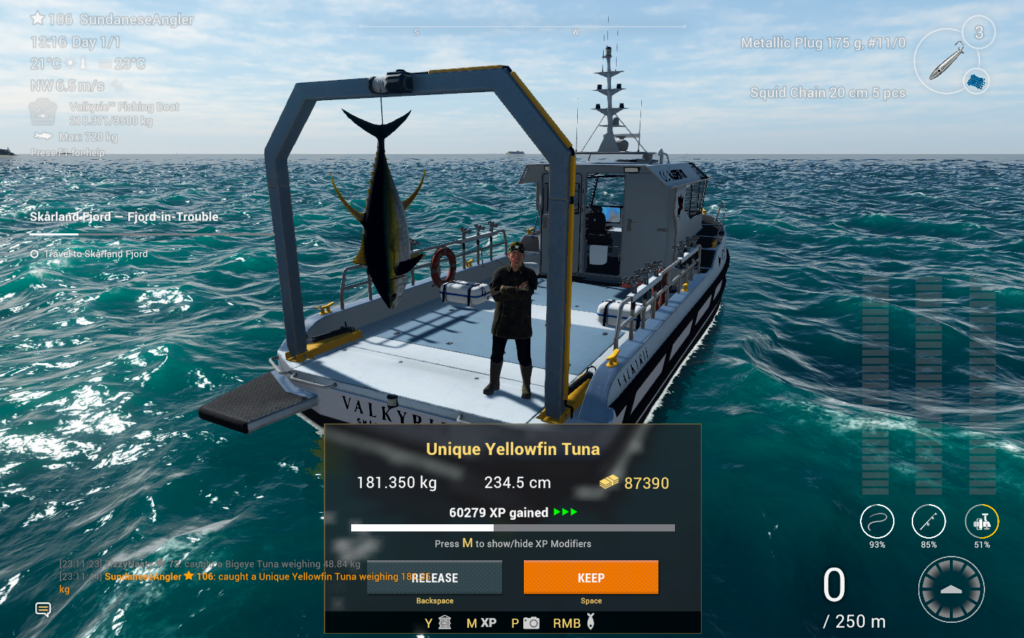
My Unique paid 87,390 coins and 60,279 XP. That is a strong coin return for Kaiji No Ri, and the tuna earns its place as one of the better paying fish on this map. Just as important, it is fun to catch. Where the deep bottom fish at Skårland make you wait, the tuna is an active, fast target that keeps you moving and fighting rather than watching a still rod tip.
It comes in Common, Trophy, and Unique classes. Mine was a Unique, the top class, so treat my numbers as the high end rather than what your first tuna will weigh. Even a Common is a satisfying fight and a decent payout.
This sits in my Kaiji No Ri cluster alongside my Giant Trevally and Giant Grouper guides. If you have only fished my cold-water Norway guides so far, this is a completely different style of fishing on a completely different map.
About the Yellowfin Tuna
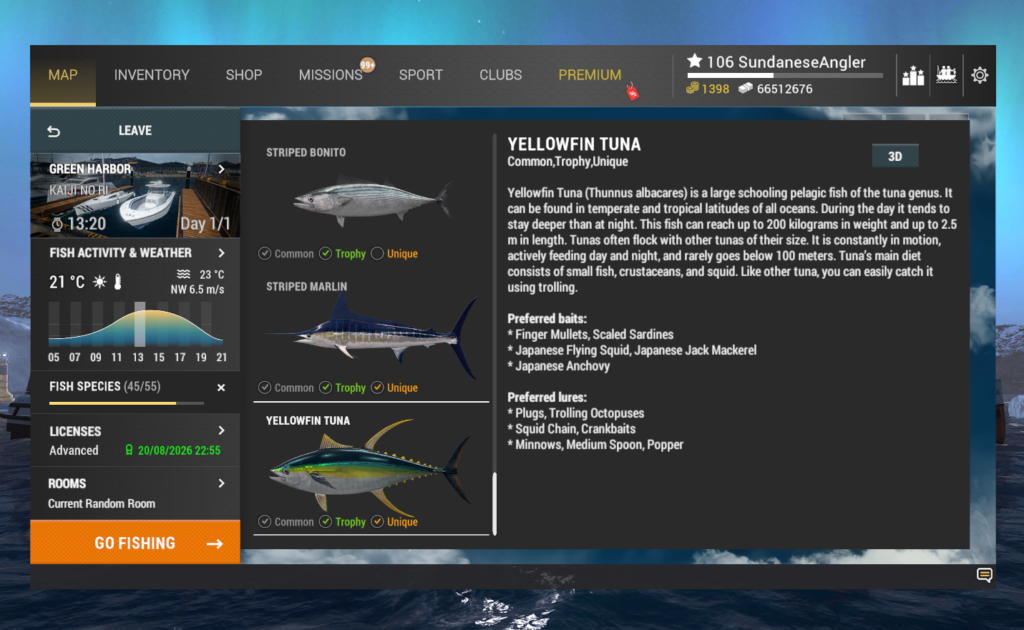
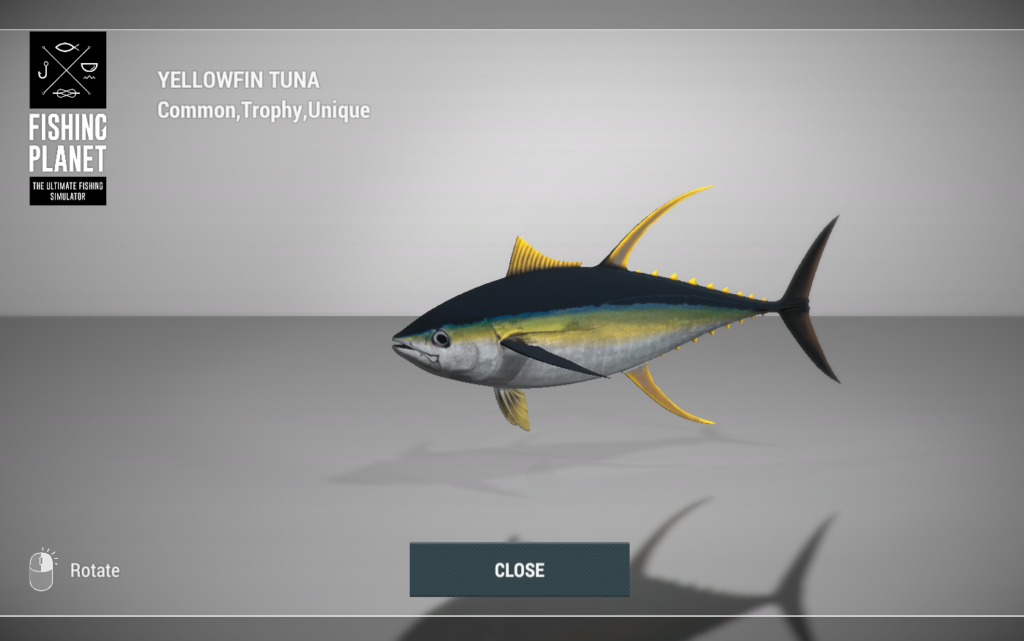
The Yellowfin Tuna is a large schooling pelagic fish found across temperate and tropical waters. It can reach around 200 kg and 2.5 metres, so my 181 kg Unique was near the top of its size range. It is constantly on the move, feeding day and night on small fish, crustaceans, and squid, and it rarely drops below 100 metres deep. The game notes that during the day it tends to hold deeper than at night, and that, like other tuna, you can easily catch it by trolling.
That last point is the key to the whole approach. This is not a fish you sit and wait for. It flocks with other tuna of its size and stays in constant motion, so your job is to put a moving lure in front of a moving fish. Everything in the rig below is built around that idea.
Where to Catch Yellowfin Tuna at Kaiji No Ri
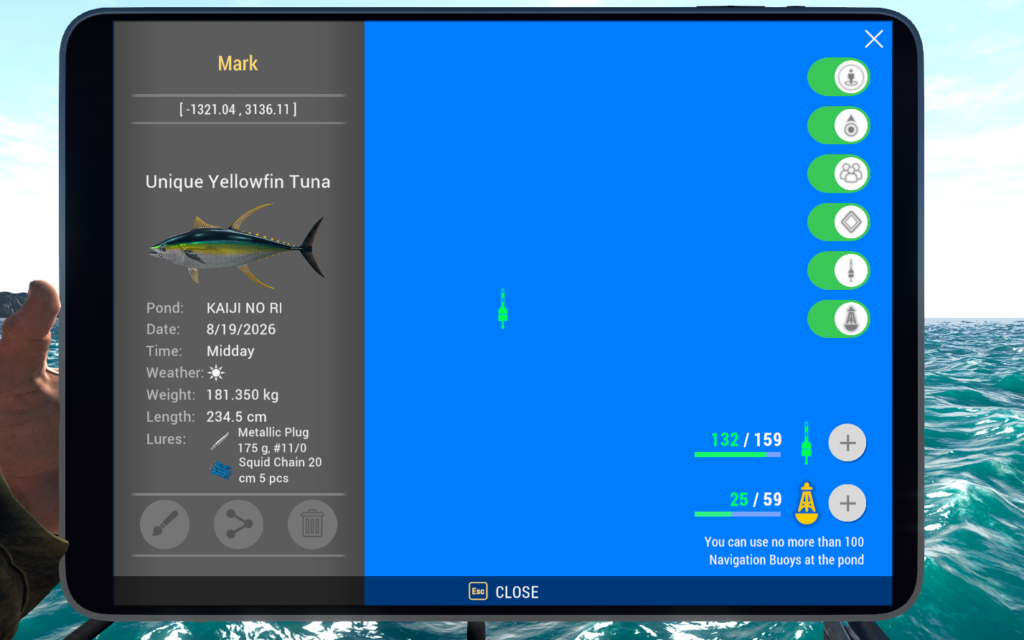
I launched from Green Harbor at Kaiji No Ri and marked my catch near coordinates -1321, 3136, out in the open water. Because tuna are always moving, the exact coordinate matters less here than it does for a bottom fish. Think of it as the area to start trolling rather than a spot to anchor over. Drop a marker buoy so you have a reference, then work the open water in runs rather than sitting still.
The productive idea is to cover water. Since the fish schools and roams, trolling lets you search until you cross a group, at which point the strikes tend to come. If a stretch is dead, keep the boat moving and change your line until you find fish, rather than parking in one place and hoping.
Best Time: Midday
This is where the tuna breaks the pattern of my Skårland guides. I caught mine at 13:16, logged by the game as Midday, under clear sun at 21°C air and 23°C water with a light north westerly around 6.5 m/s. The map activity chart backed it up, showing a clear bell curve that rose through the morning and peaked in the middle of the day before falling away toward evening.
That is the opposite of the cold Norway fish, which feed hardest at night. The tuna is a daylight, warm-water fish. Plan your trolling runs around the middle of the day, and use Forward Time to reach the midday peak if you arrive early or late. As always, avoid Next Day, which sells everything in your storage.
The Trolling Rig
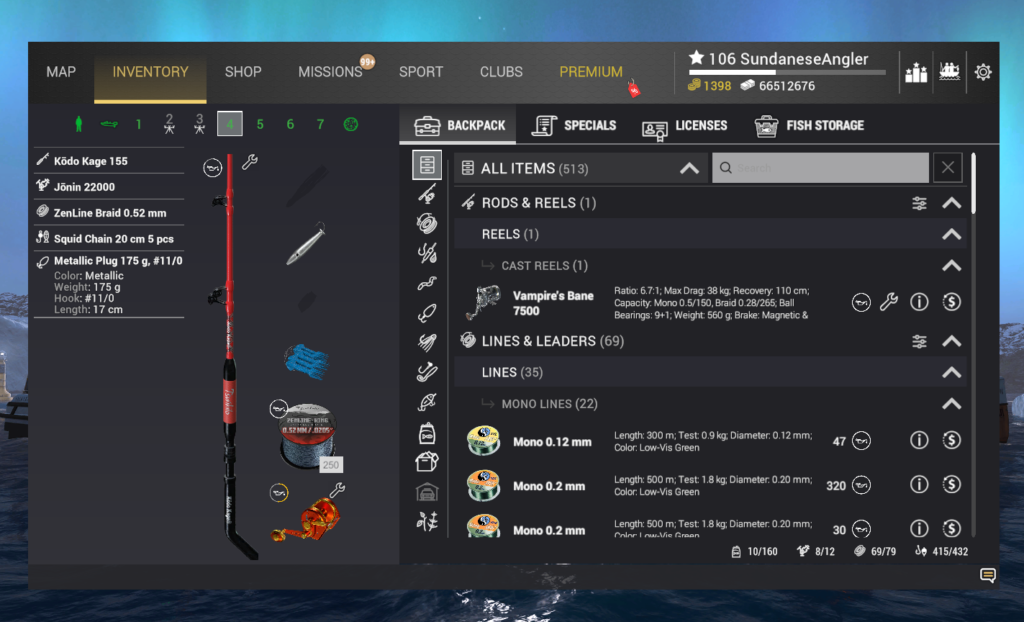
This is the exact rig that landed the fish. Note there is no sinker, no separate hook, and no bait, because this is a lure trolling setup rather than a bottom rig:
- Rod: Kōdo Kage 155
- Reel: Jōnin 22000
- Main line: ZenLine Braid 0.52 mm, 250 m spooled
- Teaser: Squid Chain 20 cm, 5 pcs
- Lure: Metallic Plug 175 g, #11/0
Every part of this is built for high-speed offshore trolling against a big, powerful fish, so do not undersize it.
The Rod: Kōdo Kage 155
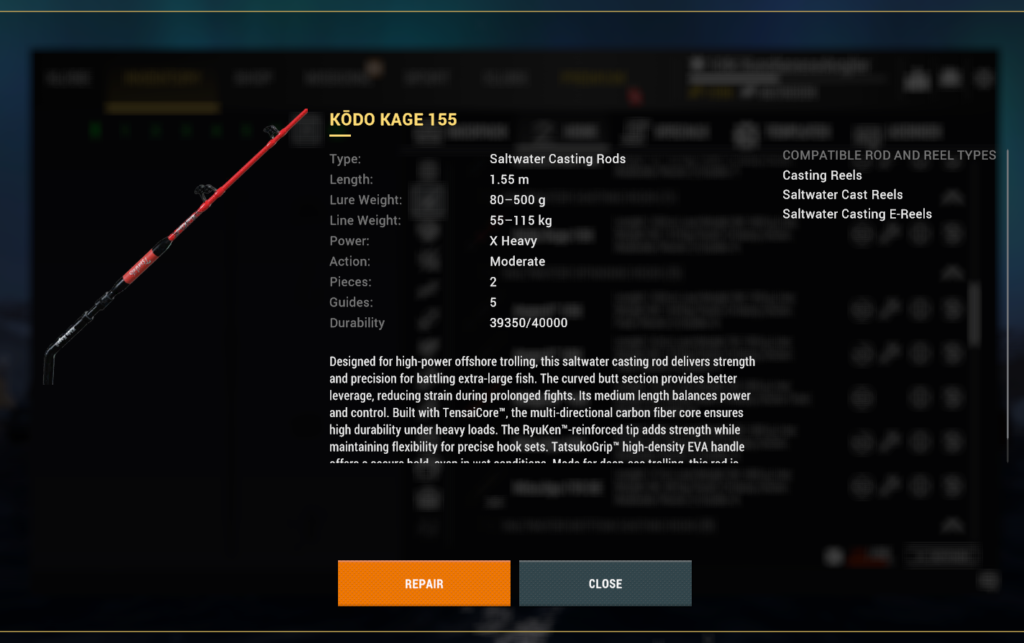
The Kōdo Kage 155 is a saltwater casting rod rated X Heavy, handling lures from 80 to 500 g and line up to 115 kg. The game describes it as made for high-power offshore trolling, with a curved butt section for leverage during long fights. In practice, that means it has the backbone to turn a tuna without folding, which is exactly what you need against a fish that pulls this hard.
The Reel: Jōnin 22000
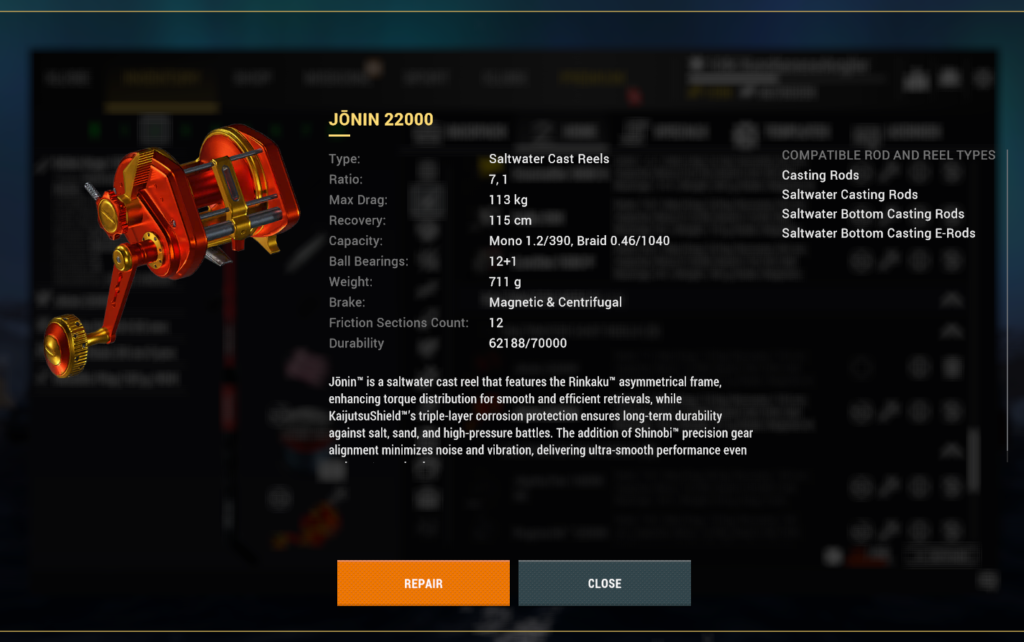
The Jōnin 22000 is a saltwater cast reel with a 7:1 ratio, a huge 113 kg maximum drag, and 115 cm of line recovery per turn. The drag is the number that matters most here. A tuna makes fast, powerful runs, and you need a reel that can apply real stopping pressure without being overrun. The high recovery rate also helps you take back line quickly between runs.
The Lure: Metallic Plug 175 g
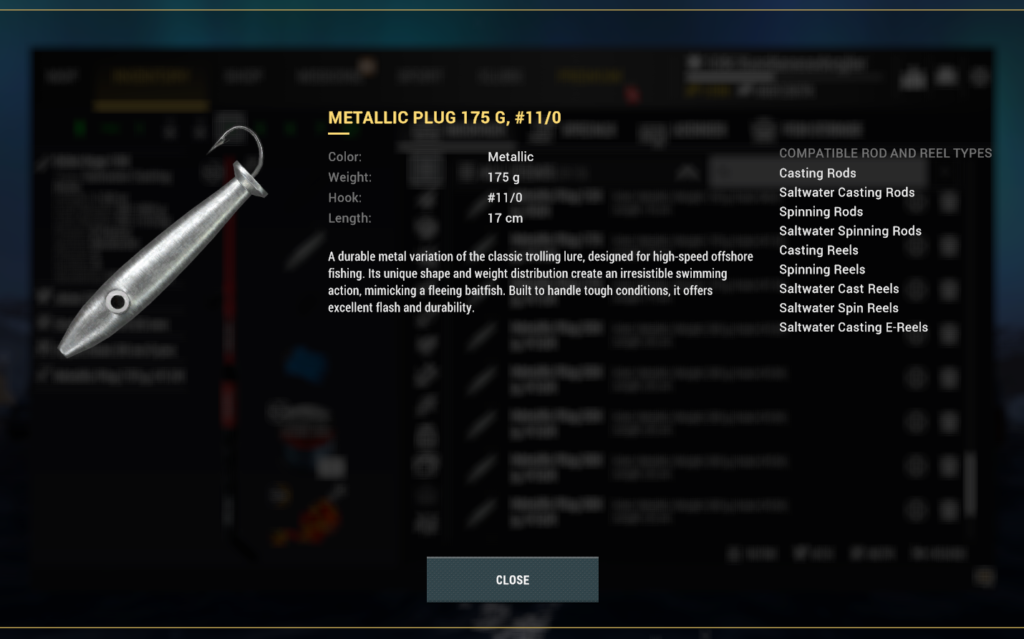
The Metallic Plug 175 g is the business end of the rig, a durable metal trolling lure with a built in #11/0 hook. The game describes its shape and weight as creating an irresistible swimming action that mimics a fleeing baitfish, with strong flash and durability for high-speed offshore work. It is the lure that actually hooks the fish, and it rides behind the teaser.
How the Squid Chain Works
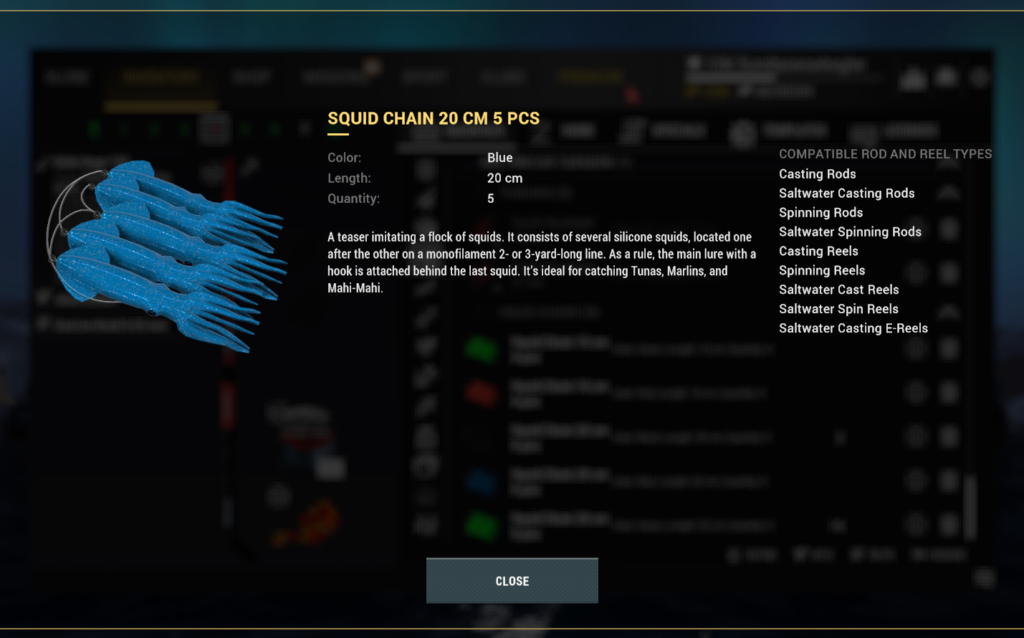
If you are new to trolling, the Squid Chain is worth understanding because it is doing a specific job. It is a teaser that imitates a small flock of squid: several silicone squids strung one behind the other on a length of line. The main lure with the hook, in this case the Metallic Plug, is attached behind the last squid in the chain. The game describes this as ideal for tuna, marlin, and mahi-mahi.
The point is that the chain of squid looks like a small group of prey fleeing through the water, which draws a predator in. The tuna chases the school and finds the trailing plug at the back, which is where it gets hooked. The teaser sells the illusion, and the lure closes the deal. Understanding that relationship is most of what makes trolling click.
Landing the Fish
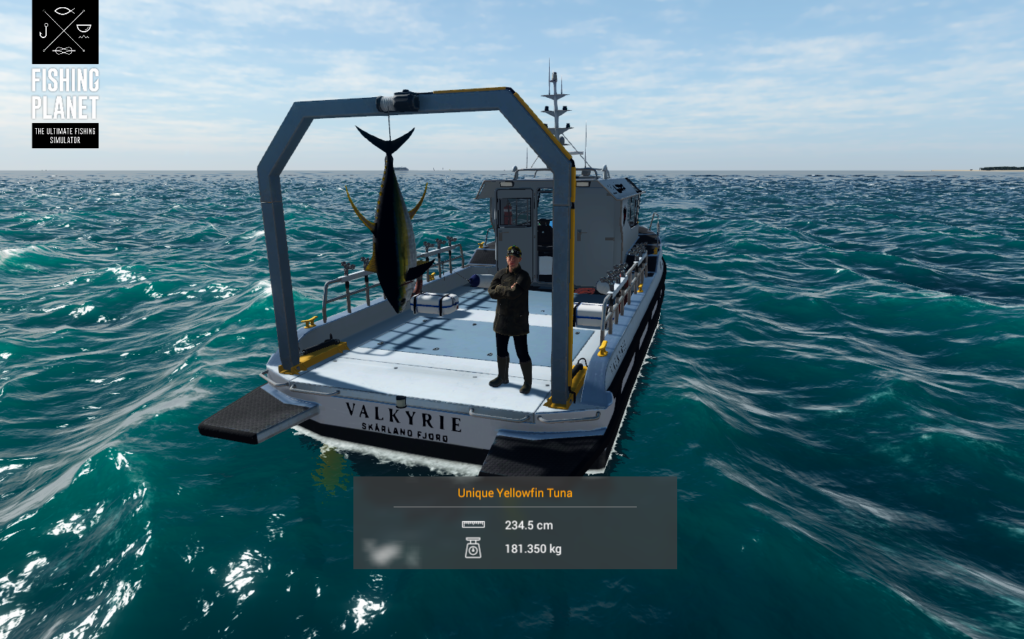
A tuna fights nothing like a bottom fish. It runs fast and hard, then circles, and it will test your drag repeatedly rather than sitting heavy on the bottom. Let the reel’s drag do its job, keep the rod loaded, and take line back on every pause rather than trying to crank against a running fish. I fished this from the Valkyrie, whose crane handled the lift at the end, and at 181 kg it sat comfortably inside the boat’s 720 kg single-fish limit.
Common Mistakes
Sitting still. Tuna roam and school. Trolling is about covering water to find them. If you park the boat and wait, you are fishing this species wrong.
Fishing at night out of habit. Unlike the cold Norway fish, the tuna feeds best in the middle of the day. Plan your runs around the midday peak.
Undersizing the drag. A tuna makes hard runs. A reel without serious drag will be overrun. The high-drag setup here exists for a reason.
Skipping the teaser. The squid chain is not decoration. It imitates a fleeing school that pulls the tuna in toward the trailing plug. Run the chain and lure together as a unit.
Cranking against a running fish. Reeling while a tuna is taking line just wears you and the tackle down. Recover line on the pauses, not during the runs.
Pressing Next Day. It sells your whole storage. Use Forward Time to reach the midday bite instead.